Our Karjaa
Page content
A photographic exhibition of life in Karjaa in the 1950s and 1960s.
The exhibited photographs show life in Karjaa 1947 -1963. The newspaper Västra Nyland’s photographer Bror Brandt (1914-1978) roamed around Tammisaari, Hankoo, Karjaa, Pohja, Inkoo and Kirkkonummi with his camera and his glass negatives. In additon to photographing local news events, Brandt also took pictures of the work and life of the people.
Karjaa is depicted in the 1950s and 1960s as a railway junction. Steam locomotives stop at Karjaa railway station, taking passengers to Hyvinkää, Hanko, Helsinki or Turku. Men work hard at a roof tile factory; women connect landline phone calls by hand and young people listen to vinyl records in a record bar. Newspaper photographs have captured moments in the past and at the same time an entire era.
All the images in the exhibition are news photographs from the 1950s and 1960s by Bror Brandt of the Västra Nyland newspaper, except for the photo of the Karjaa railway station sign from 1947. We no longer know who took it. As late as the 1940s several consequtive days could pass without a single photograph in the paper. Bror Brandt became the newspaper’s first photographer with a permanent contract.
Brandt was self-taught. At the age of 12 he began his career as a paper boy for Hufvudstadsbladet (HBL) and Svenska Pressen in Helsinki. He continued in several different roles at HBL’s printing house. During the war he developed and copied aerial photographs for the Finnish Armed Forces, and after the war he worked at the Foto Roos photo studio.
On 1.9.1949 Brandt was hired as a photoengraver and photographer for Ekenäs Tryckeri Ab and the Västra Nyland newspaper. He retired from there 28 years later.
The exhibition curated by Raija Linna from the Picture Collections of the Finnish Heritage Agency. The photographs of the exhibition are from the Press Photo Archive JOKAs collection of the newspaper Västra Nyland.
The exhibition also features puppet theatre artist Aapo Repo’s interactive camera obscura.
Heidi Gilhooly, Tanja Is-Selin, Joanna Maltzeff, Tiina Oasmaa.
The photographic exhibition has been made possible by grants by the Amos Anderson Fund, Bergsrådinnan Sophie von Julins stiftelse, Emilie & Rudolf Gesellius Stiftelse, Karjaan-Pohjan Säästöpankkisäätiö, Svenska folkskolans vänner rf, the foundation Brita Maria Renlunds minne sr., the Swedish Cultural Foundation in Finland and William Thurings stiftelse.
Photographs: Bror Brandt / Västra Nyland / Press Photo Archive JOKA / Finnish Heritage Agency
Except for The railway station, 1947: Unknown photographer
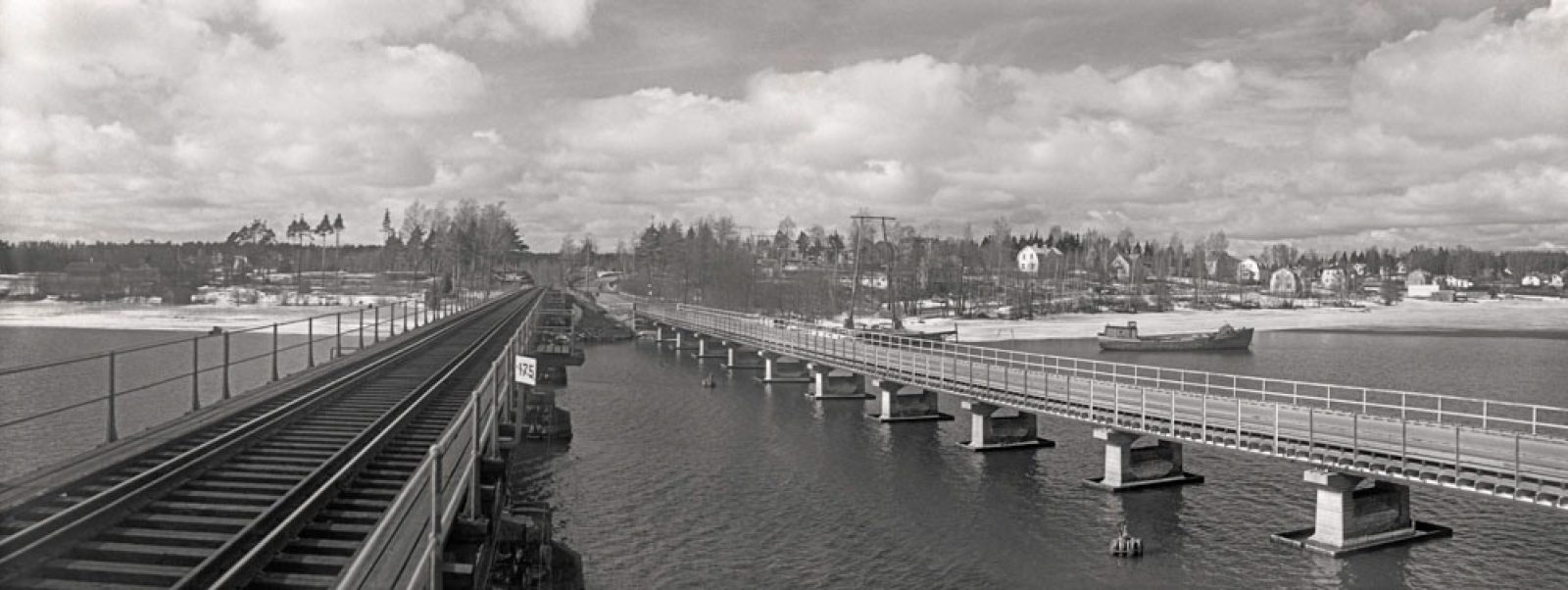
The bridges, 1950
Both the road and the railway from Karjaa to Hanko run via Tammisaari. At the Kråkholmen island, the bridges cross the bay of Pojoviken / Pohjanpitäjänlahti, which stretches from the Gulf of Finland all the way to Pohja. On the opposite side of the bay lies Österby. The photograph was taken in March 1950.
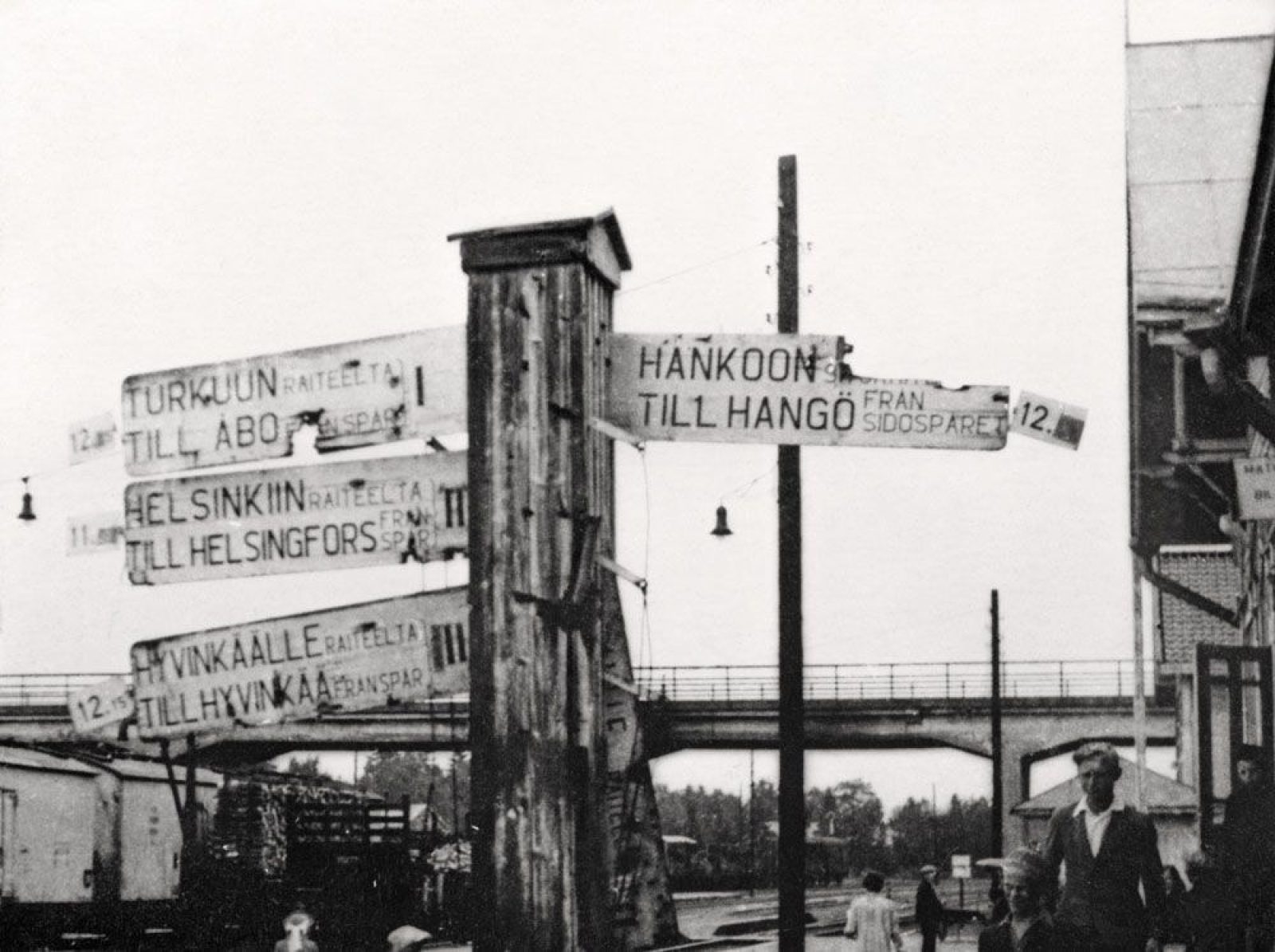
The railway station, 1947
Rail traffic between Hanko and Hyvinkää began in 1873. The coastal railway was completed at the turn of the century: Turku–Karjaa in 1899 and Karjaa–Helsinki in 1903. Karjaa became an important railway junction, with trains running towards Helsinki, Turku, Hyvinkää and Hanko.
From 1944 to 1956 the line ran through the Soviet-controlled Porkkala lease area, terminating traffic at two points. Trains from Helsinki reached only Luoma, while those from Karjaa ran as far as Tyris. This photograph was taken at Karjaa railway station in 1947, the year the Soviet Union agreed to allow Finnish trains to pass through the lease area. However, the windows of passenger carriages had to be covered, and a Soviet locomotive hauled the train across the area.
Unknown photographer
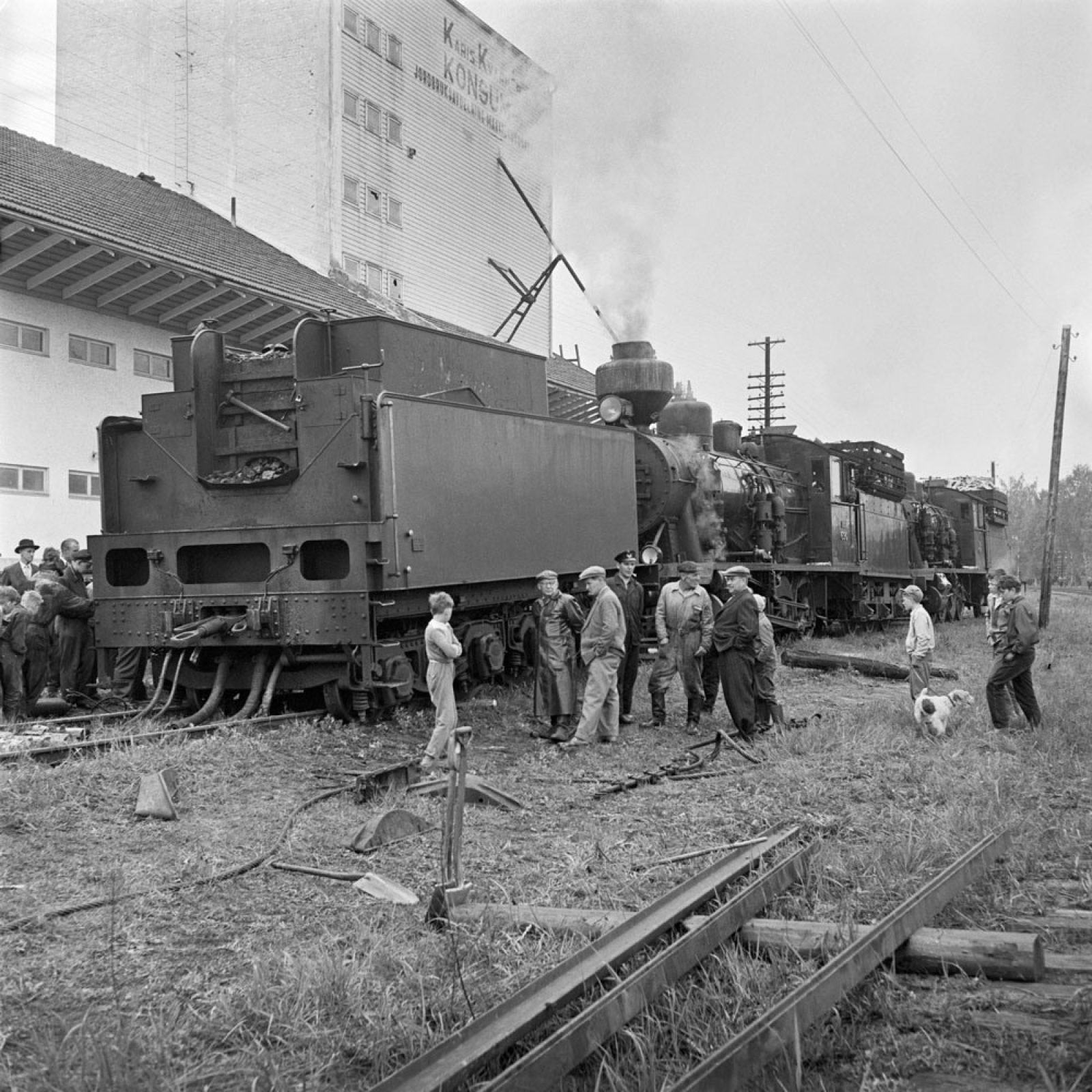
A rail accident, 1957
In early June 1957, a derailed freight locomotive drew curious onlookers to the Karjaa rail yard.
The Tr1 steam locomotive—nicknamed Risto— had jumped the tracks on 6 June near the Karjaa mill (Karis Kvarn Ab). According to Västra Nyland’s report, the engine carried the name of President Risto Ryti; the heavy 150‑ton Tr1 class had entered service during his presidency.
The locomotive involved in the accident, No. 1057, was built at the Lokomo works in Tampere in 1953. It was eventually scrapped in 2024, but can still be seen on screen in the film Pekka ja Pätkä lumimiehen jäljillä “Pete and Runt on the Trail of the Abominable Snowman“, where it plays a brief yet memorable role.
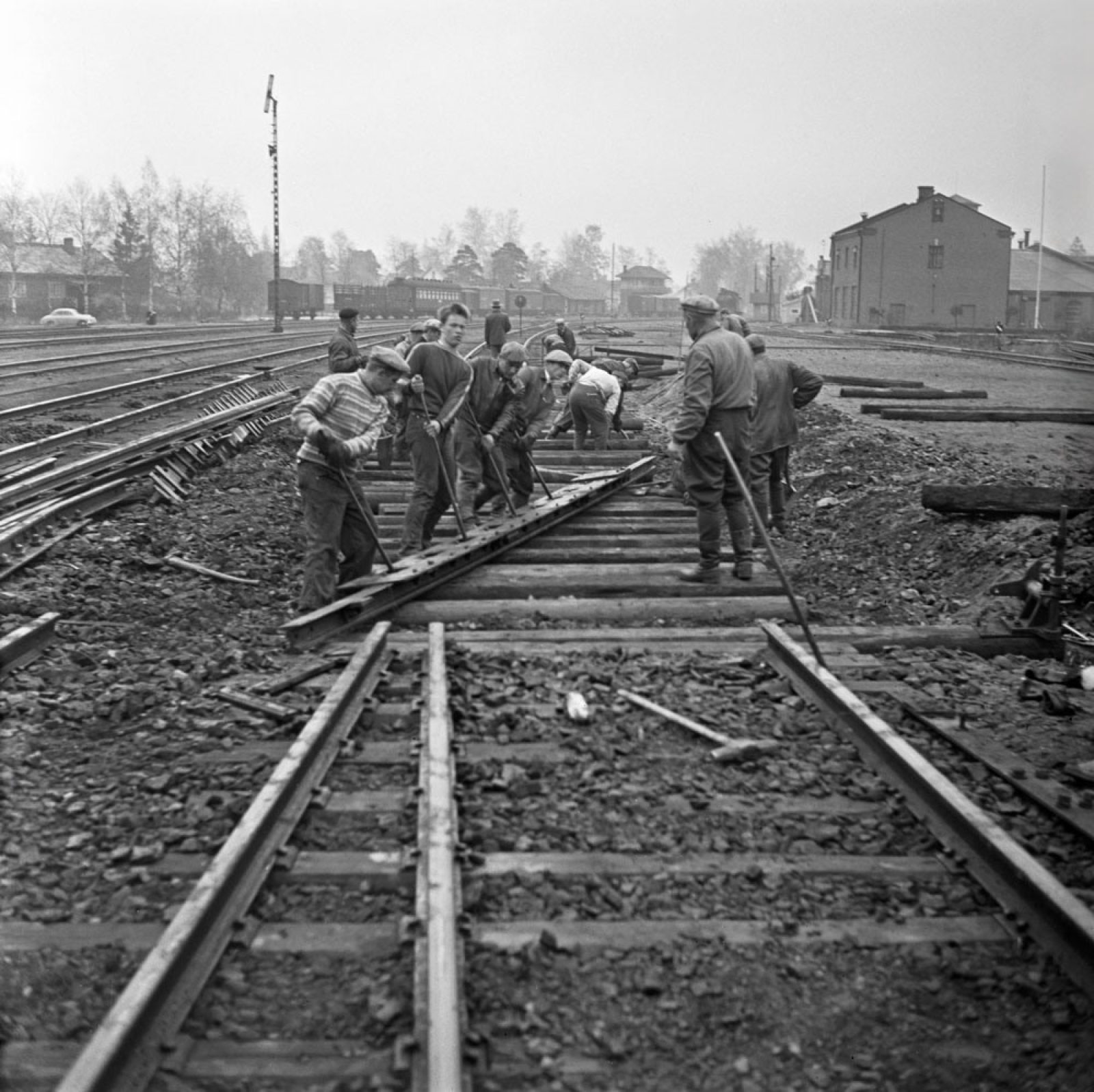
The railway is being refurbished, 1959
On 18 October 1959, railway workers set about improving safety around Karjaa station. The platforms were extended, and a protective fence was erected between the two main lines. Only a few openings were left in the fence for passengers needing to cross from one platform to another.
According to Västra Nyland, the work was unlikely to be completed before winter. Labour force was in short supply, and the work itself was heavy and slow.
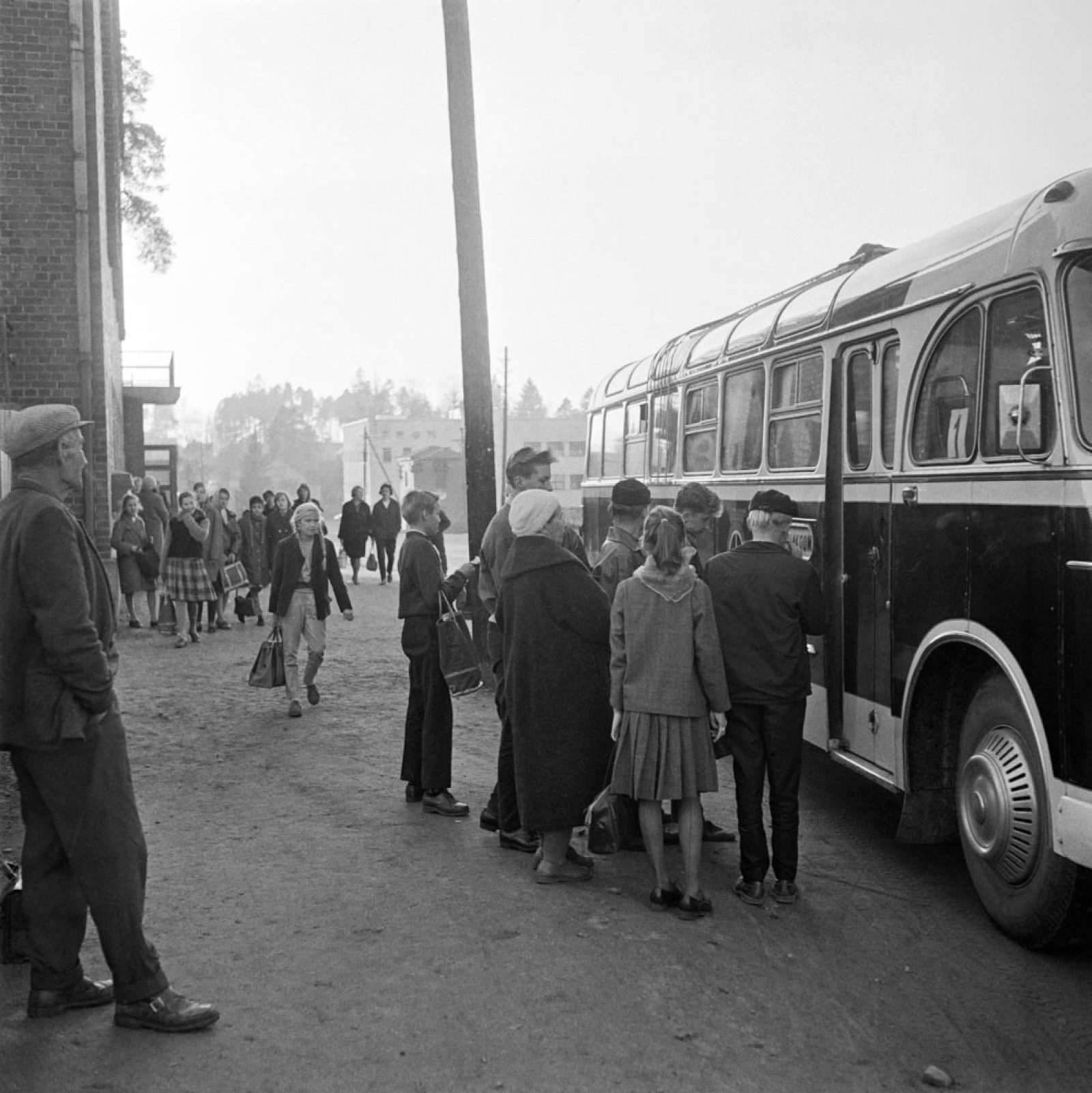
The bus station, 1961
Schoolchildren hurry to the bus at Karjaa bus station, in front of the fire station, in October 1961. According to the newspaper Västra Nyland, writing on 25 October 1961, the traffic is at its busiest – and most dangerous – around half past three in the afternoon. At that time, three or even four buses may be arriving or departing at once.
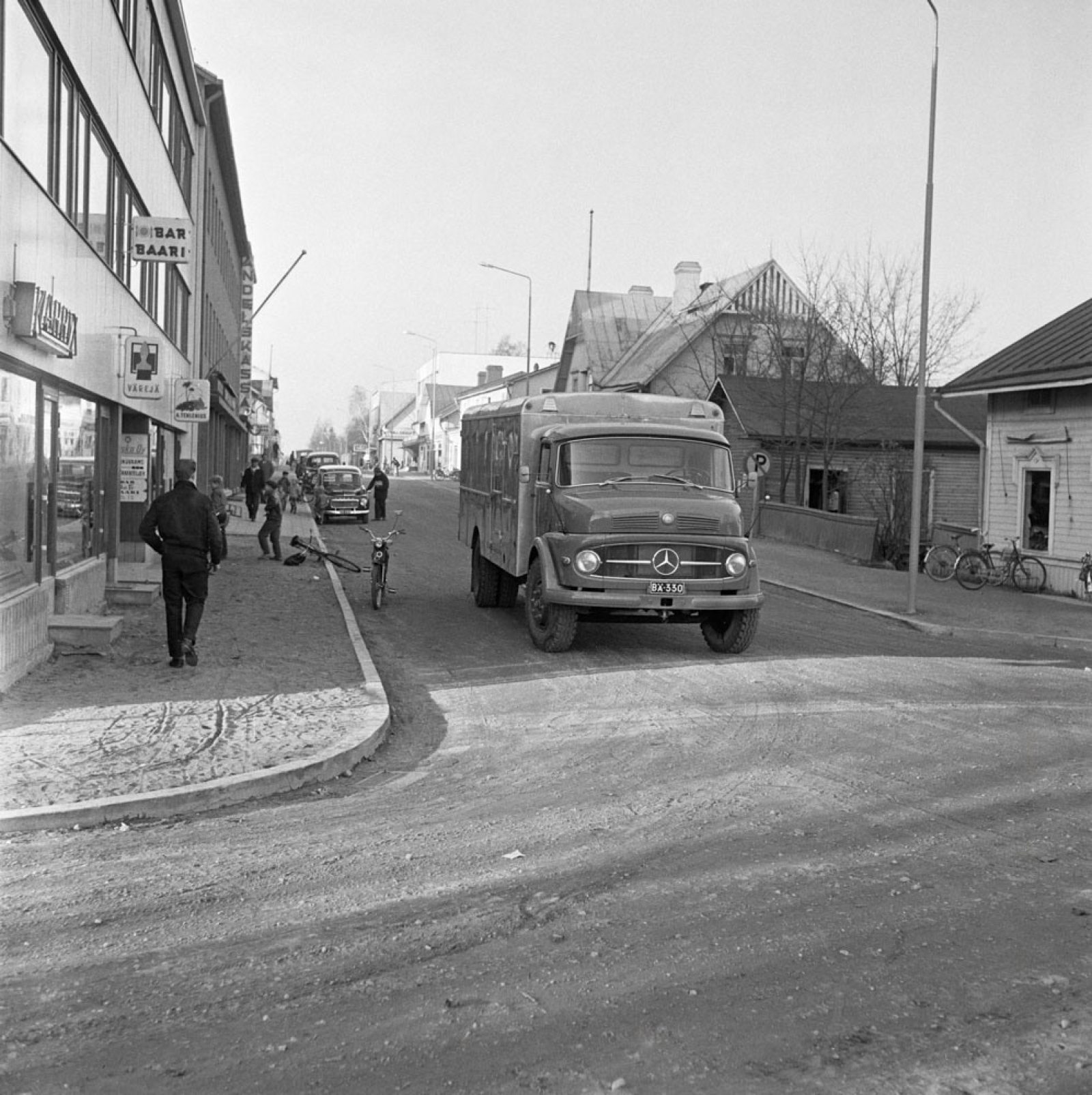
The Kauppiaankatu street, 1961
A Mercedes-Benz lorry rolls into the crossroads of Kauppiaankatu and Ratakatu in the centre of Karjaa in October 1961. On the near left stand a bar and a photography studio, while further down the street to the left is the Osuuskassa bank ‘Andelskassa’.
On the right-hand side of the street, just behind the lorry, stood for many years Mrs Hille Finnberg’s (1882–1976) chemist’s shop, ‘Karis Kemikaliehandel’.
By the Mustionjoki river, 1950
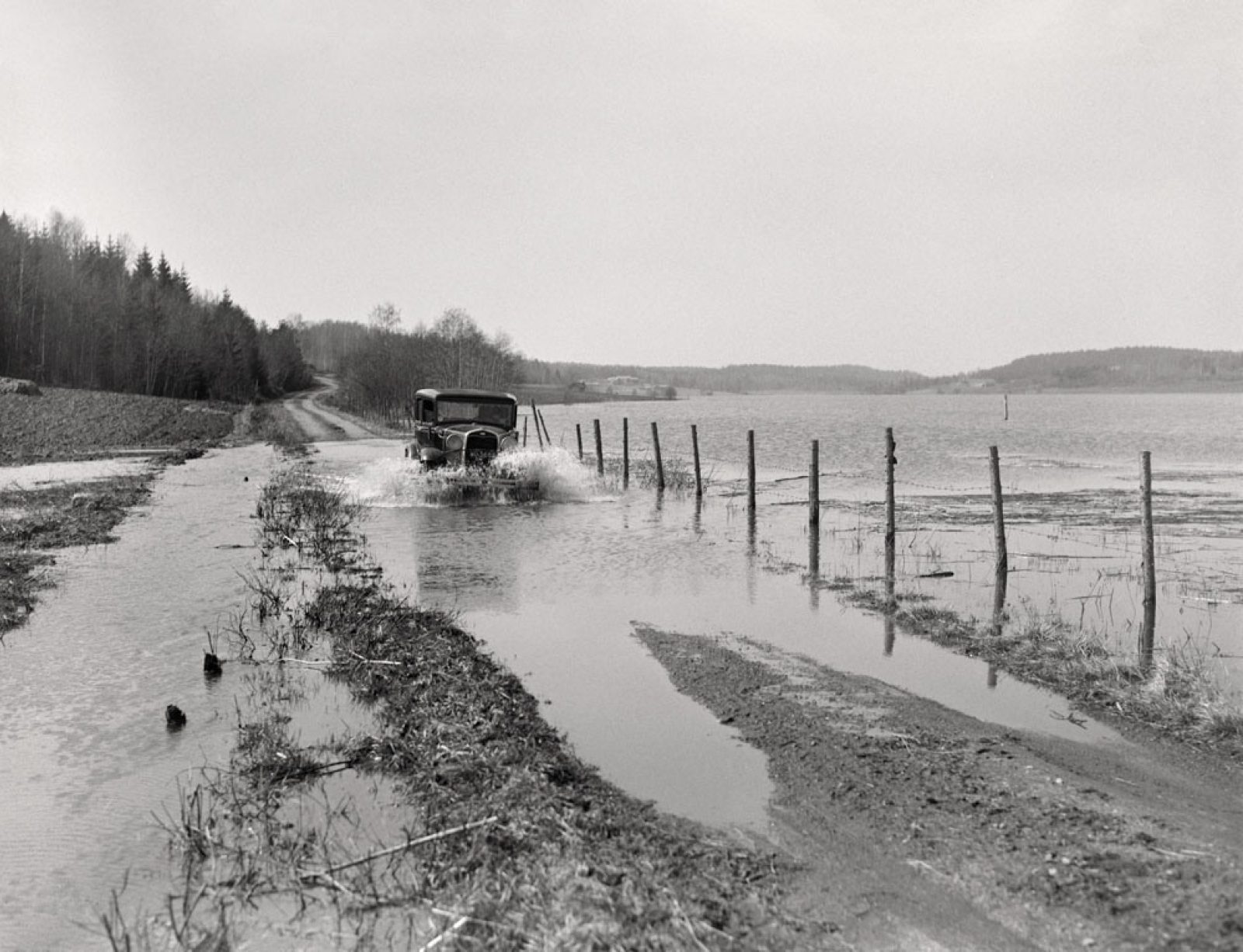
In April 1950 the Mustionjoki River floods more severely than at any point in the previous decade. On many farms, half of the arable land lies under water. In the village of Mangård in Mustio, in the northern part of Karjaa, the water rises onto the road. A past proposal to build a dam along the Mustionjoki surfaces once again.
The fire engine, 1958
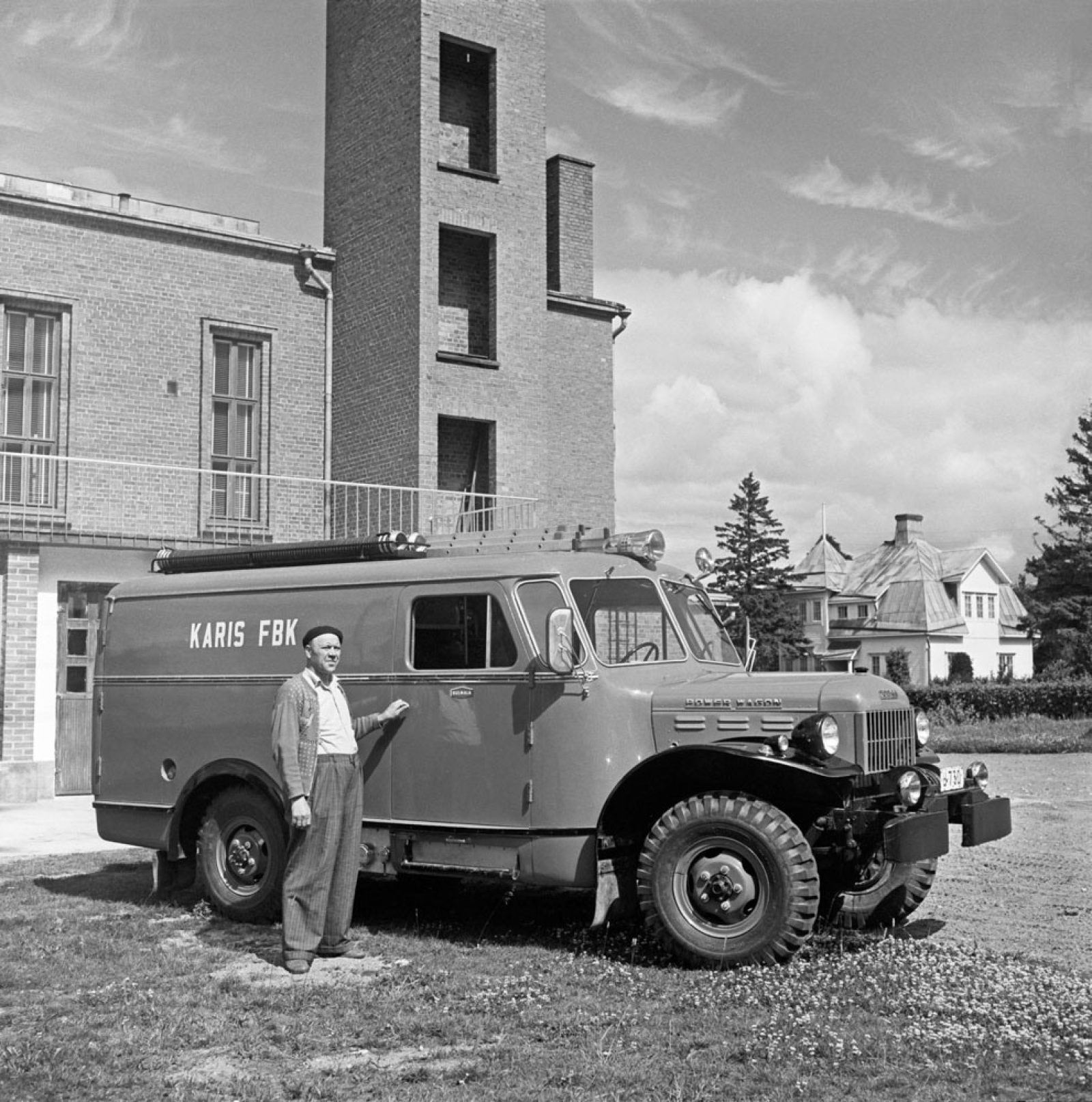
Knut Berglund, chairman of the board of Karjaa volunteer fire brigade, proudly presents the new fire engine outside the Brankis station on 19 July 1958. The Dodge Power Wagon fire engine cost more than four million marks. Berglund is its first driver. The vehicle carries, among other things, aluminium ladders over nine metres long, assembled from three sections — light enough for a single firefighter to put together. Only one other fire brigade in Finland has a similar set.
In the Bank, 1963
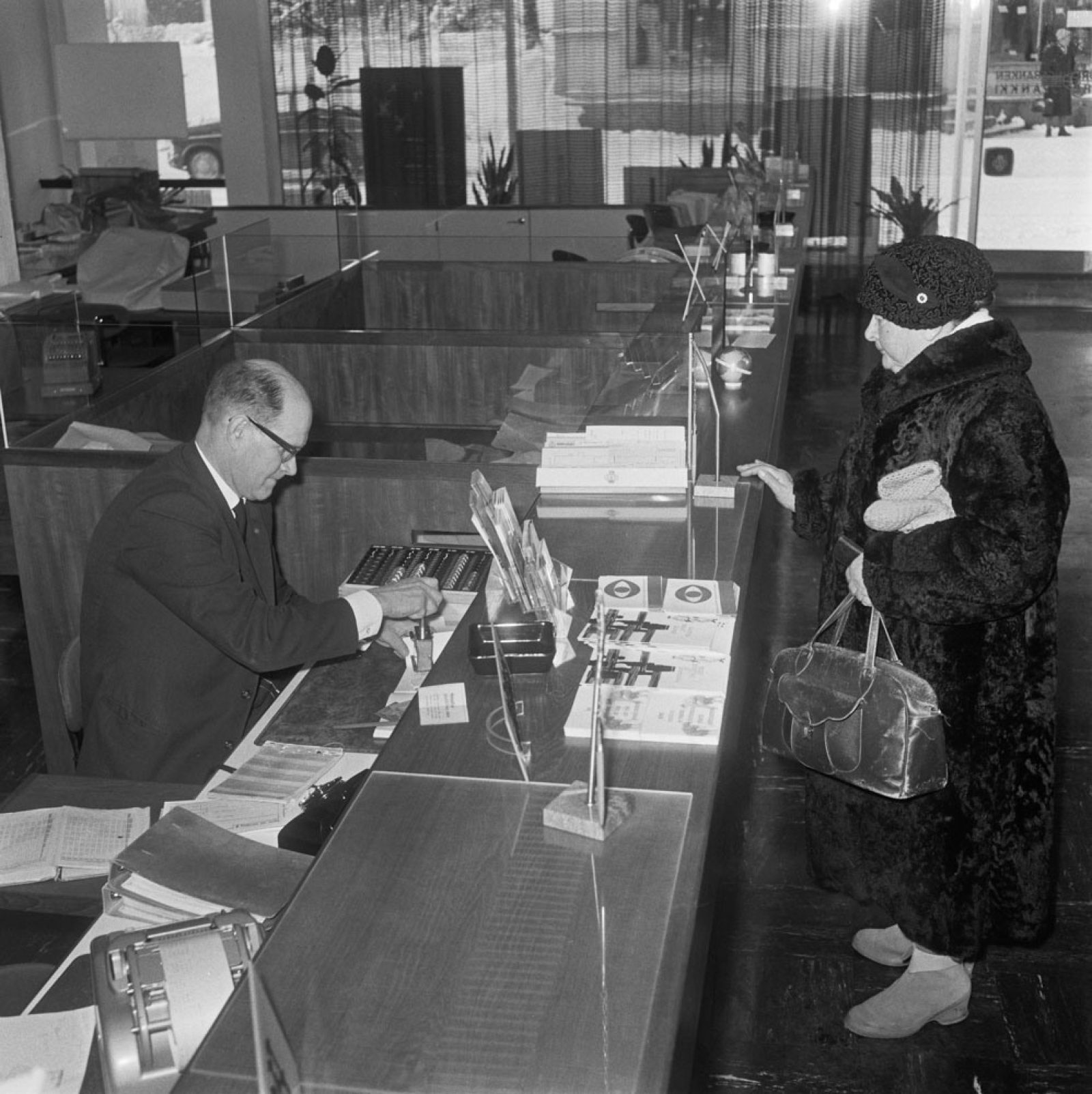
Bank manager Nils Lindblad serves an elderly lady at the counter in the Karjaa Savings Bank on 31 January 1963. If negotiations over banking-sector wages fail, the Nordic countries may face their first-ever bank strike.
The Crematorium, 1964
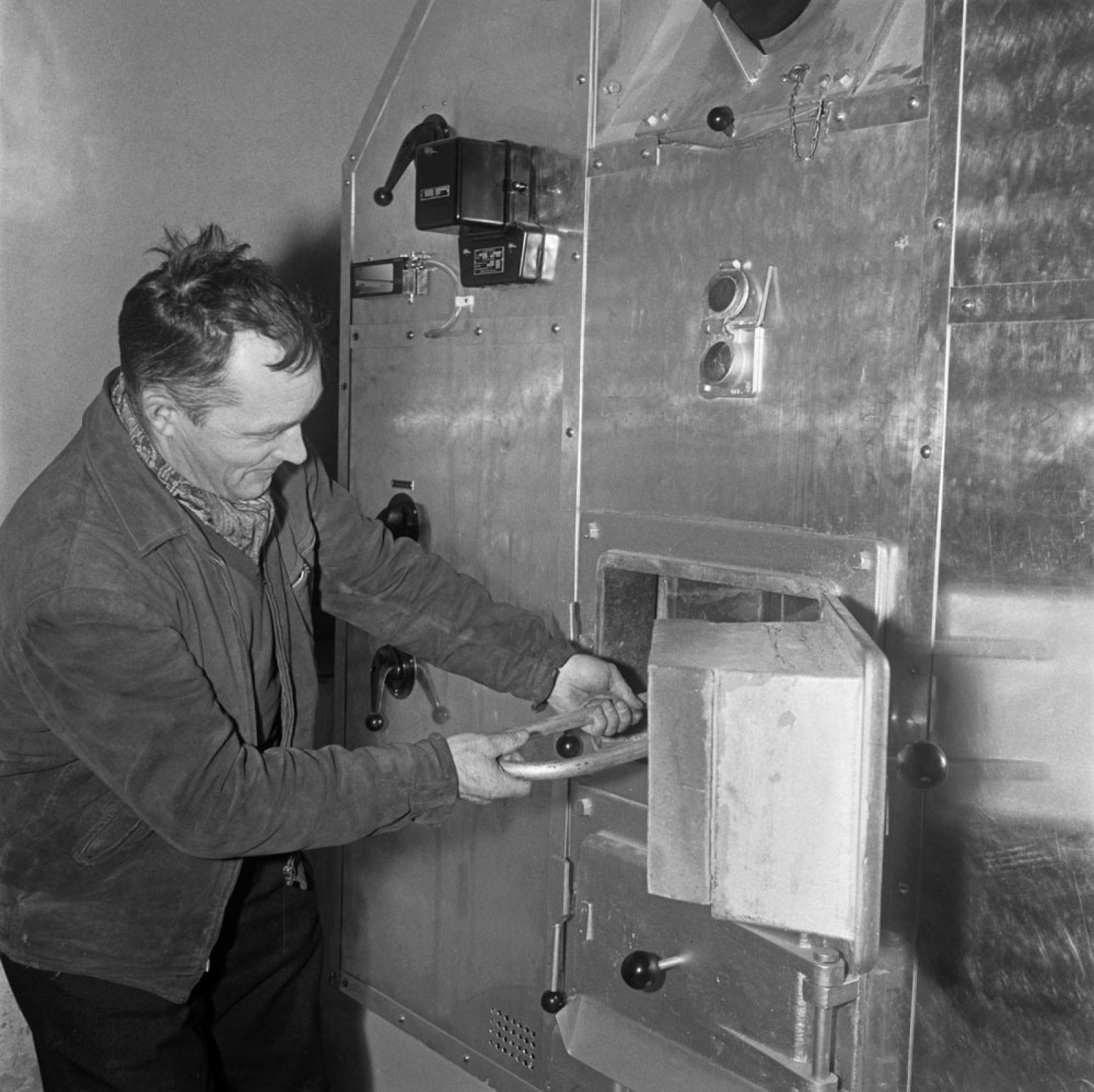
Set in the ground floor of St Olaf’s Chapel, next to the St Olaf Cemetery, the Karjaa crematorium opened its doors on 16 January 1964 as the only crematorium serving Western Uusimaa.
The photograph shown here captures the building on 29 November 1964, in its first year of operation.
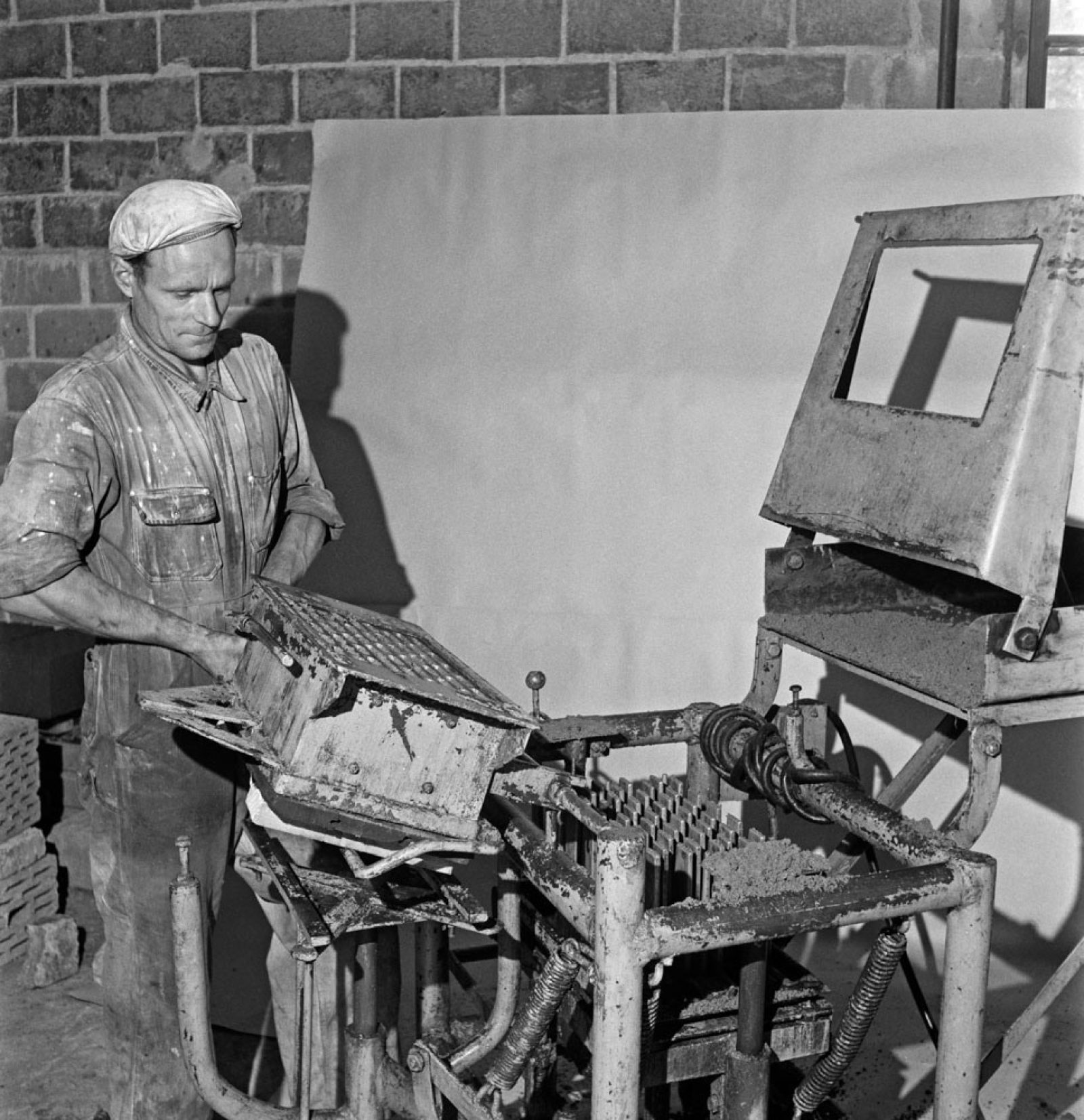
The brick factory, 1952
A brickmaker at work at Raaseporin Tiili Oy (Raasepori Brick Ltd) on 11 September 1952. Founded in 1943 to produce roof tiles, the factory served the region for nearly half a century before closing its doors in 1992.
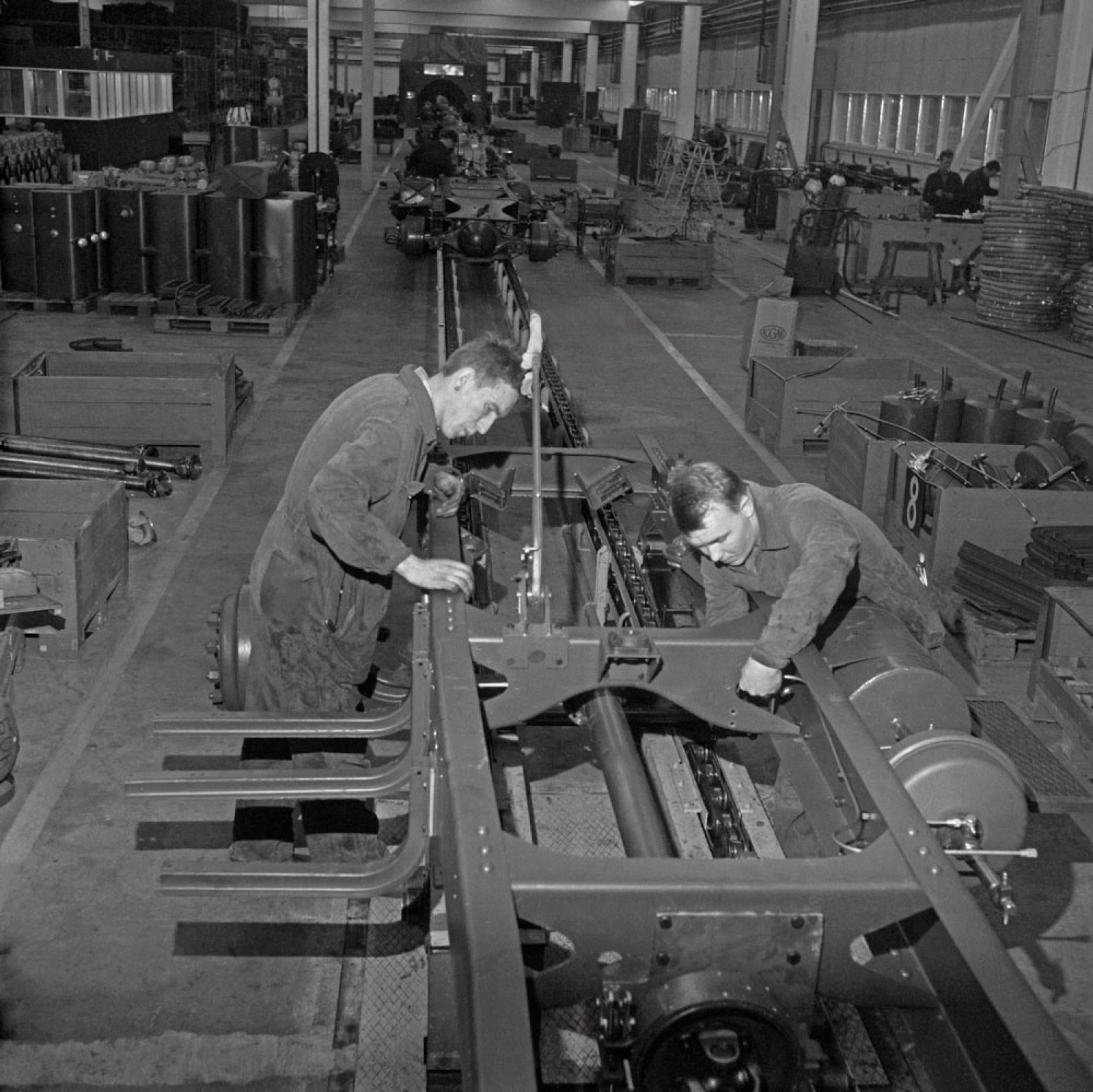
The vehicle factory, 1962
Einar Halminen and Aaro Kotajoki install brake pipes on the assembly line of Suomen Autoteollisuus (SAT) (the Finnish Automotive Industry) factory in Karjaa on 11 December 1962. The newspaper Västra Nyland reports the next day that a brand‑new lorry rolls off Finland’s first vehicle assembly line every working hour — 3,000 vehicles a year. All of them carry the Sisu brand. The Finnish Automotive Industry moved its assembly operations to Karjaa in 1951, and a new assembly hall and a conveyor belt opened in 1961. By then, around 300 people kept the factory running.
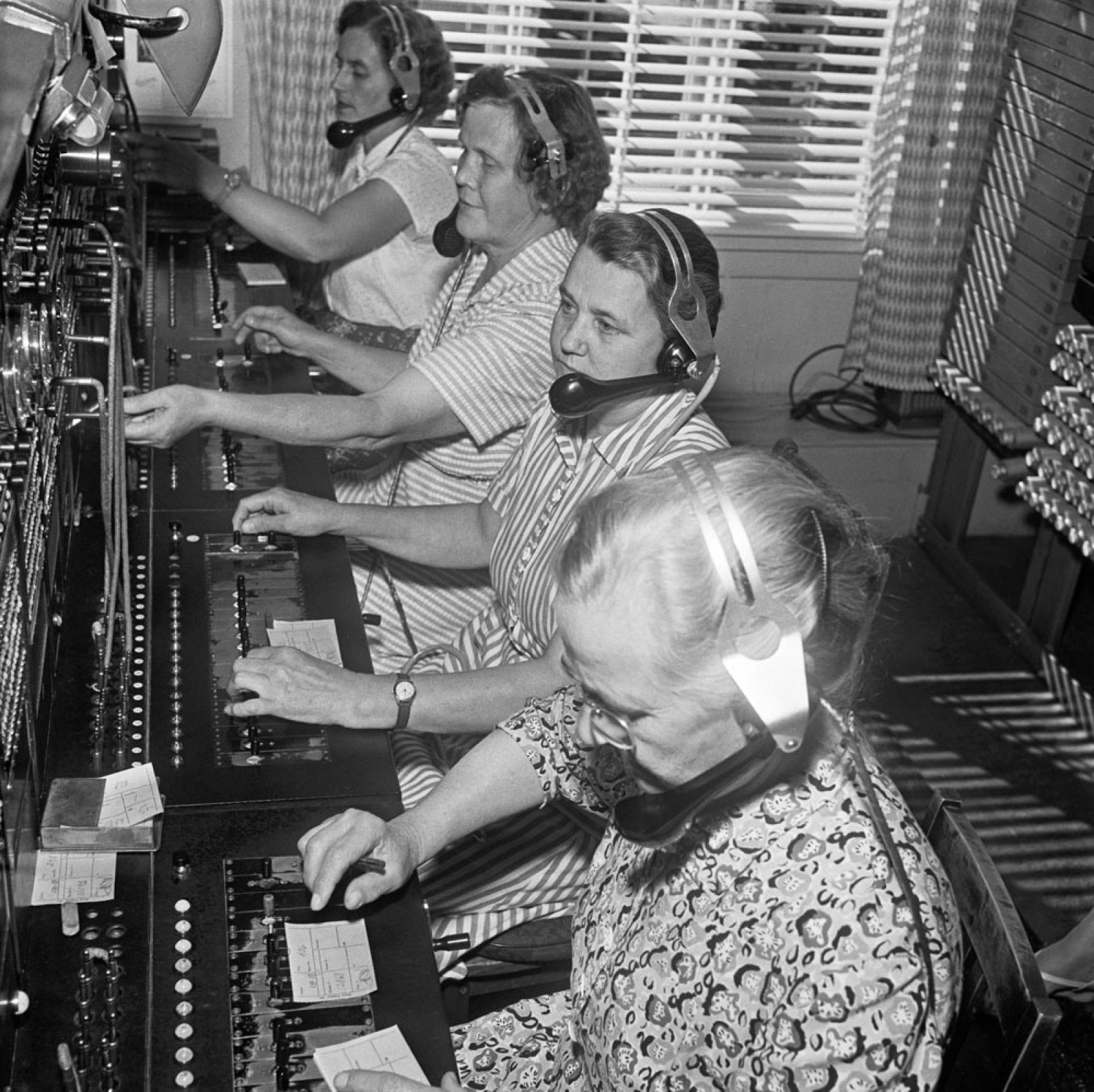
The telephone switchboard, 1958
From front to back: Signe Nikander, Margit Ahlfors, Astrid Nylund and Margit Wasström connect calls at the Karjaa Telephone Company switchboard on 3 September 1958. A new automatic exchange will take over in Karjaa at 11 p.m. on 6 September. From then on, knowing the name of the person you wish to reach will no longer be enough — callers will have to look up the correct number in the phone directory, and charges will be based on the length of the call.
The switchboard operators now face unemployment. Mrs. Nikander has been connecting calls since 1921, when the exchange served around 120 subscribers.
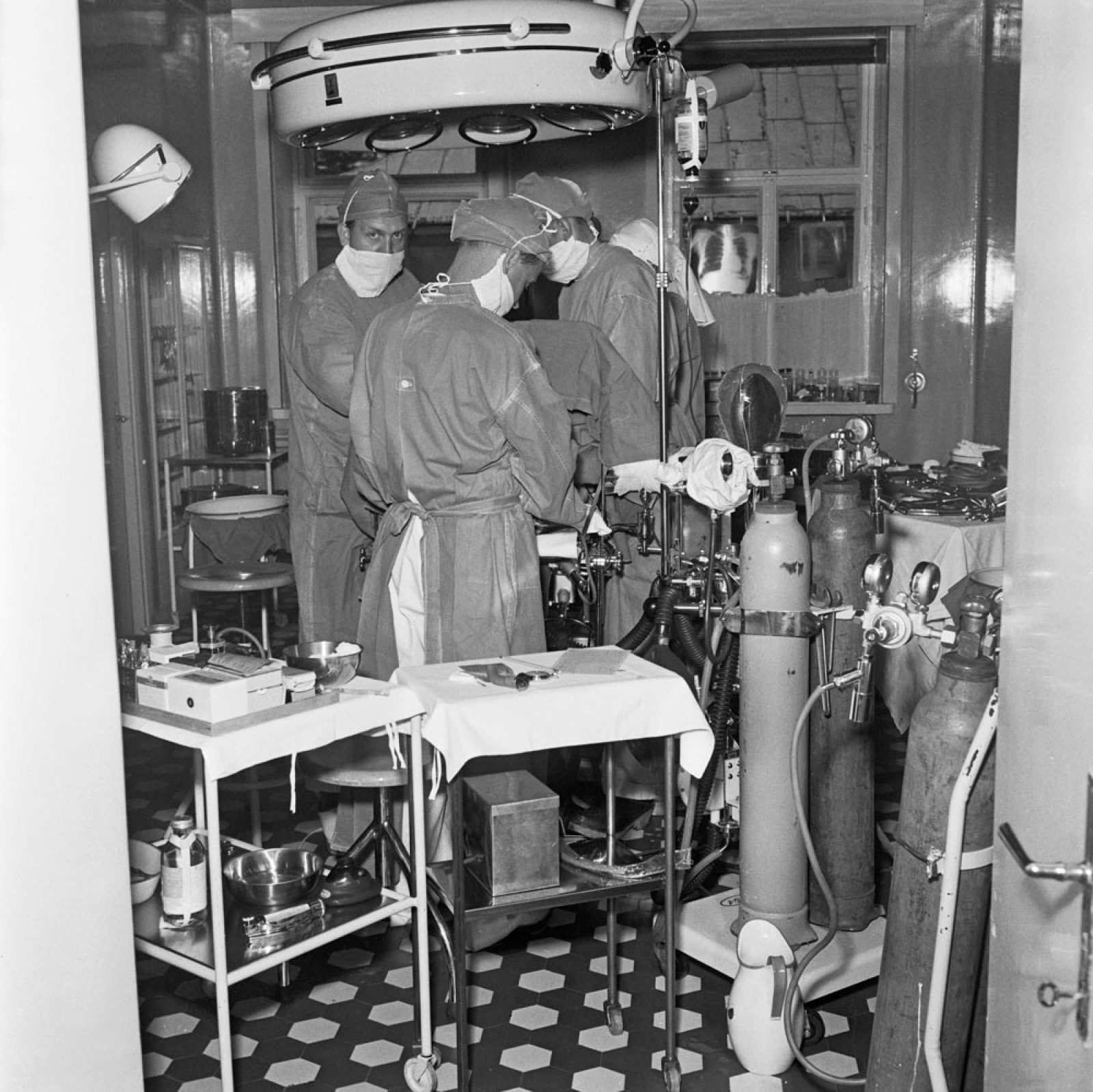
Meltola Sanatorium, 1958
Doctors I. Railo, E. Stenberg and Lars Ekroth perform a lung operation in the operating theatre of Meltola Sanatorium (later Meltola Hospital) in Karjaa on 18 December 1958. The sanatorium, completed in 1936, was in need of renovation by 1958.
From 1931 to 1962, Meltola cared for those suffering from tuberculosis. Until the 1950s, tuberculosis was a widespread national illness in Finland, claiming thousands of lives each year.
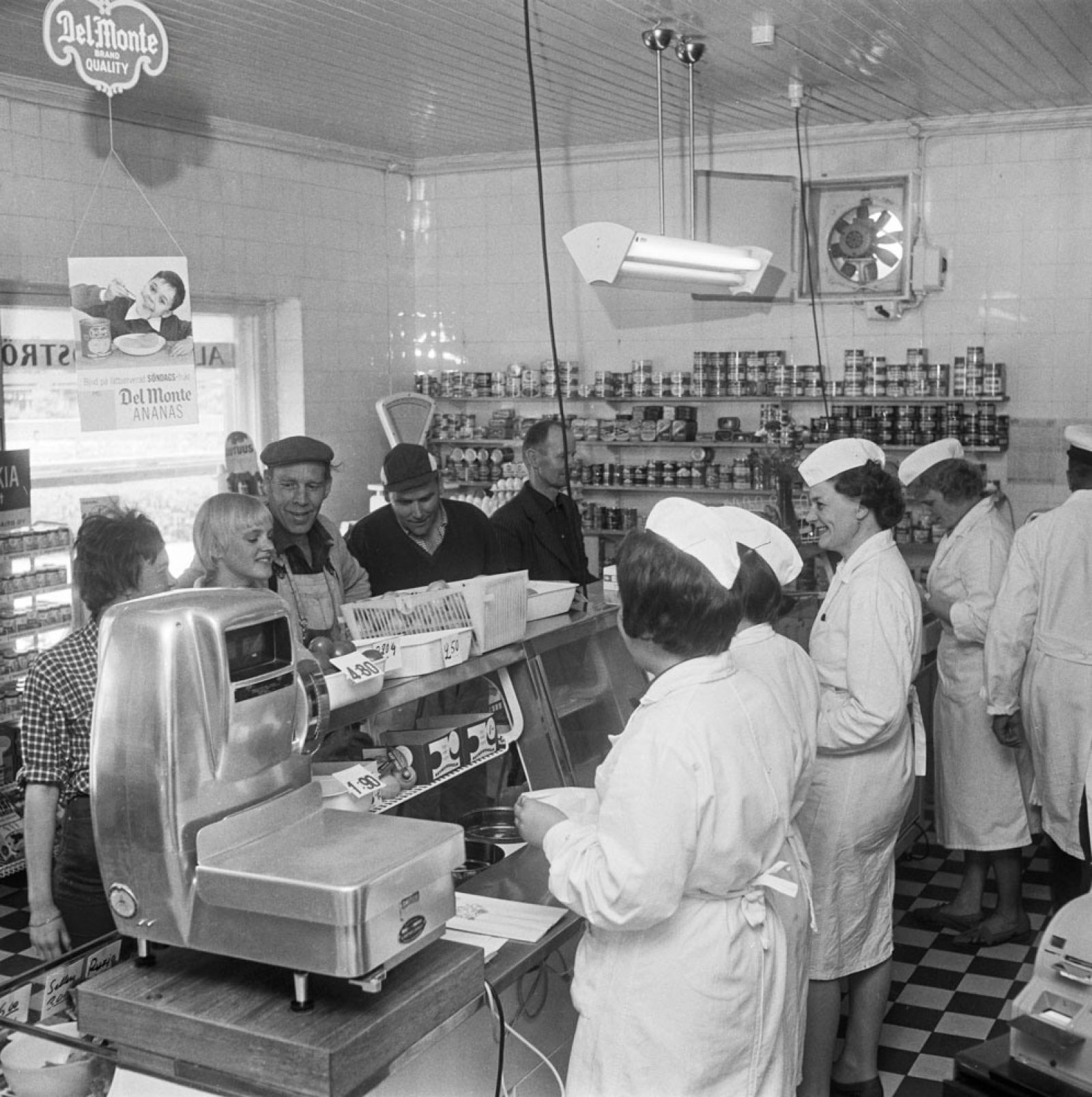
The grocery store, 1964
In June 1964, four shop assistants — (from left) Synnöve Finnberg, Margaretha Tennström, Dagny Tennström and Inger Holmström — serve customers in a Karjaa grocery store. The cheerful staff enjoy their work: good spirits thrive where the team pulls together.
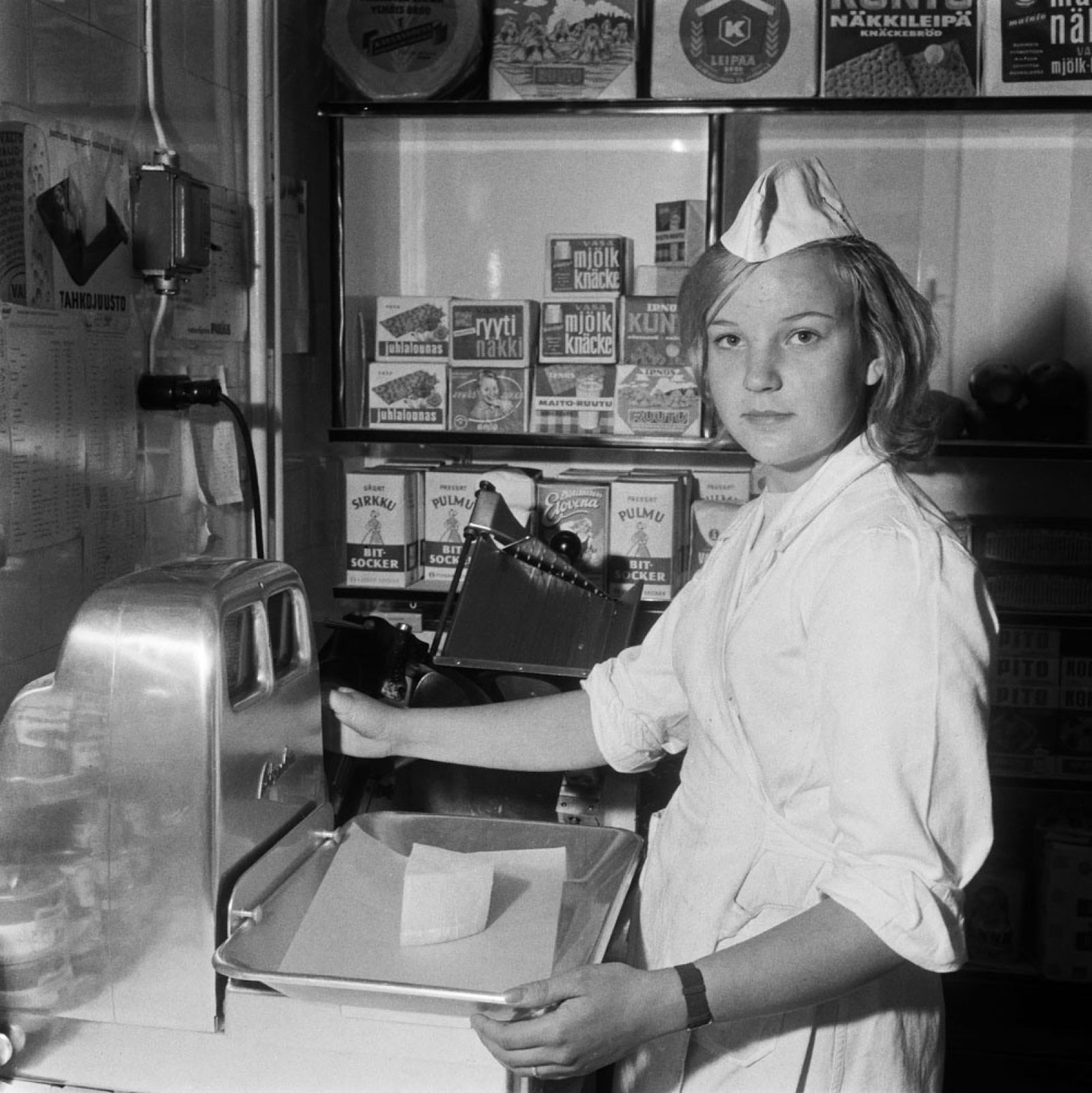
A Trainee, 1962
In August 1962, Viveka Lindström spends her summer working in a Karjaa butcher’s shop. She has just finished school that spring and does not yet know what she wants to do in the future.
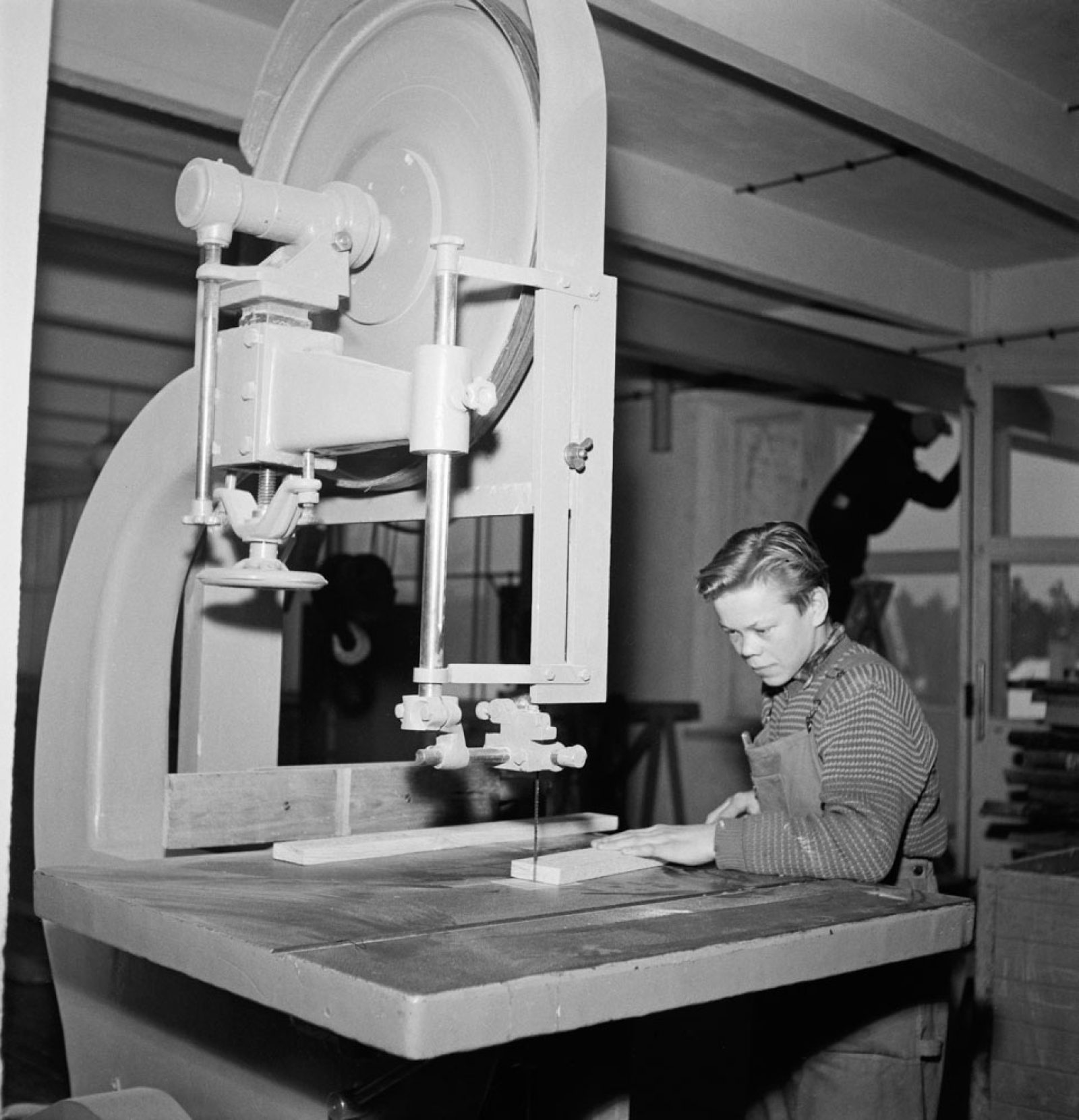
A vocational school student, 1955
Kalevi Ojanperä saws a plank on a band saw at the Western Uusimaa Vocational School in Karjaa on 14 January 1955. The band saw was donated from Sweden. The school’s new building was inaugurated the very next day — a Hilding Ekelund design with the forge and metal workshop downstairs and the carpentry workshop on the floor above.
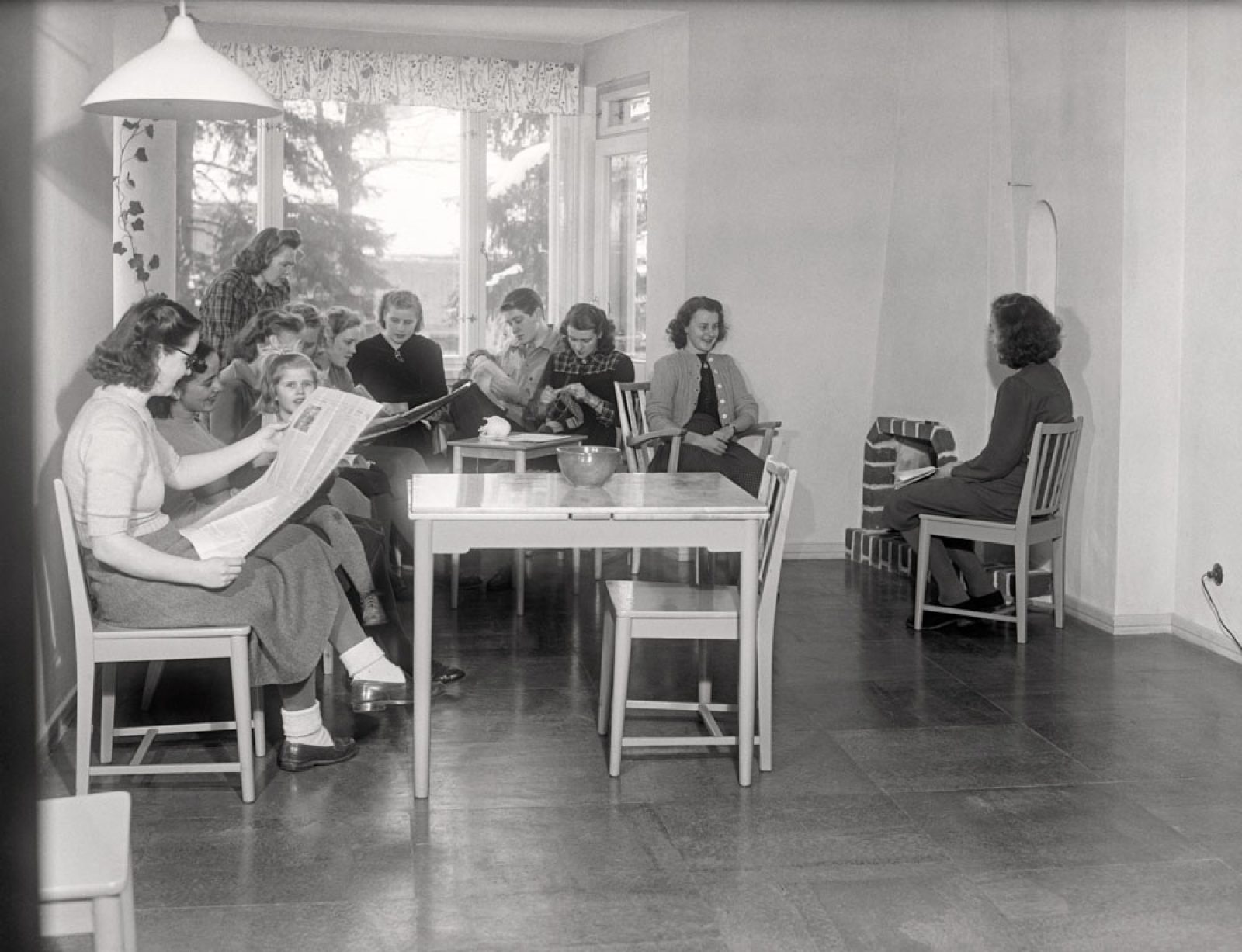
The Lärkkulla Christian College, 1950
In January 1950, students of the Lärkkulla Christian College spend their free time knitting, reading and talking together. The common room of this residential college in Karjaa features an open fireplace, and the students enjoy such modern comforts as a refrigerator and an electric oven. The school, designed by architect Hilding Ekelund, is inaugurated on Sunday, 29 January 1950.
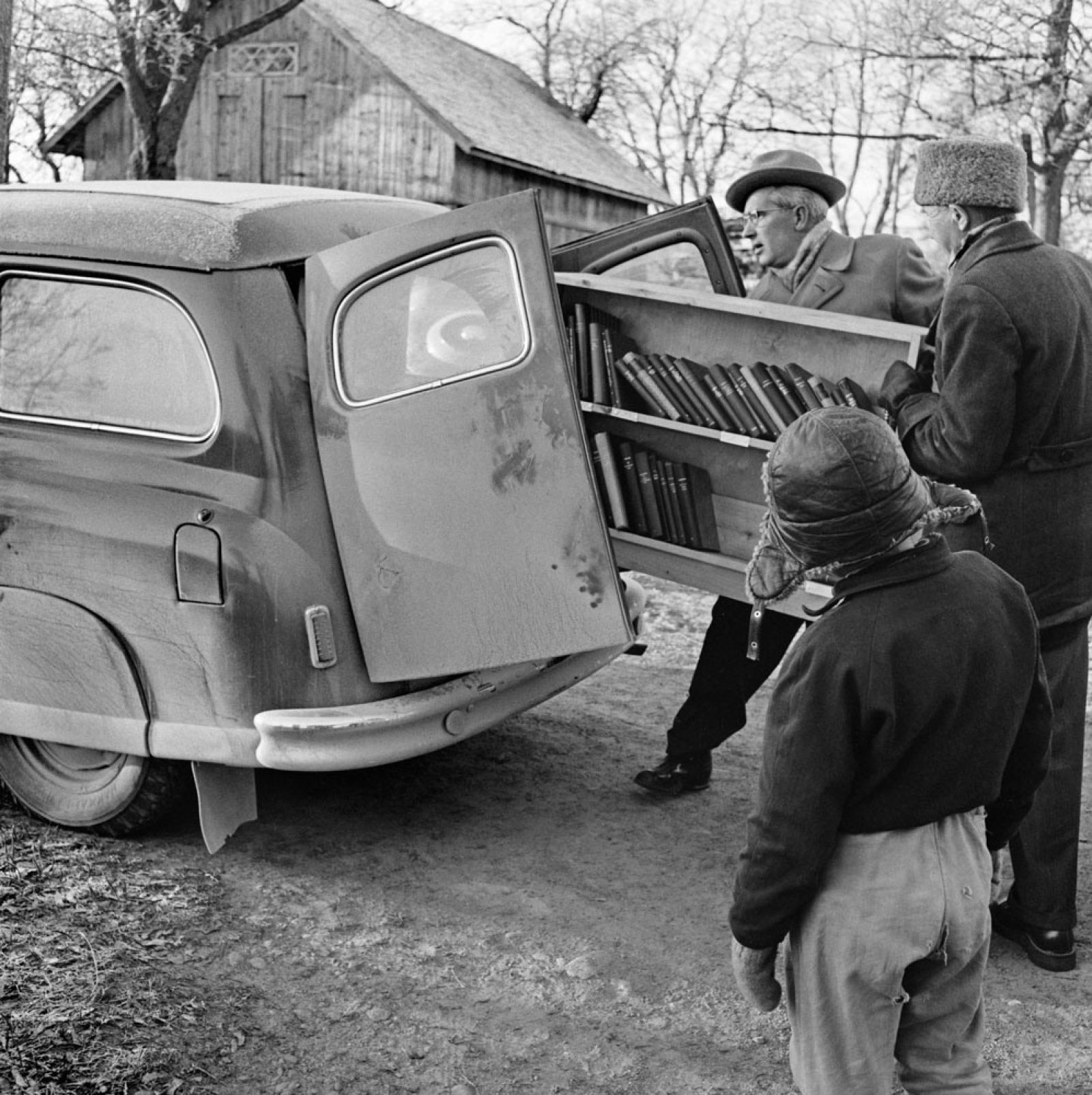
The mobile library, 1956
On 12 November 1956, library board chairman Allan Sällman and farmer Albin Enberg heave bookcases into the boot of an estate car in the yard of the Mankers farm in Finbacka. Western Uusimaa’s first mobile library is making its rounds in the southern part of the rural municipality of Karjaa. During the round, 103 books find readers — more than half of the books carried on the tour.
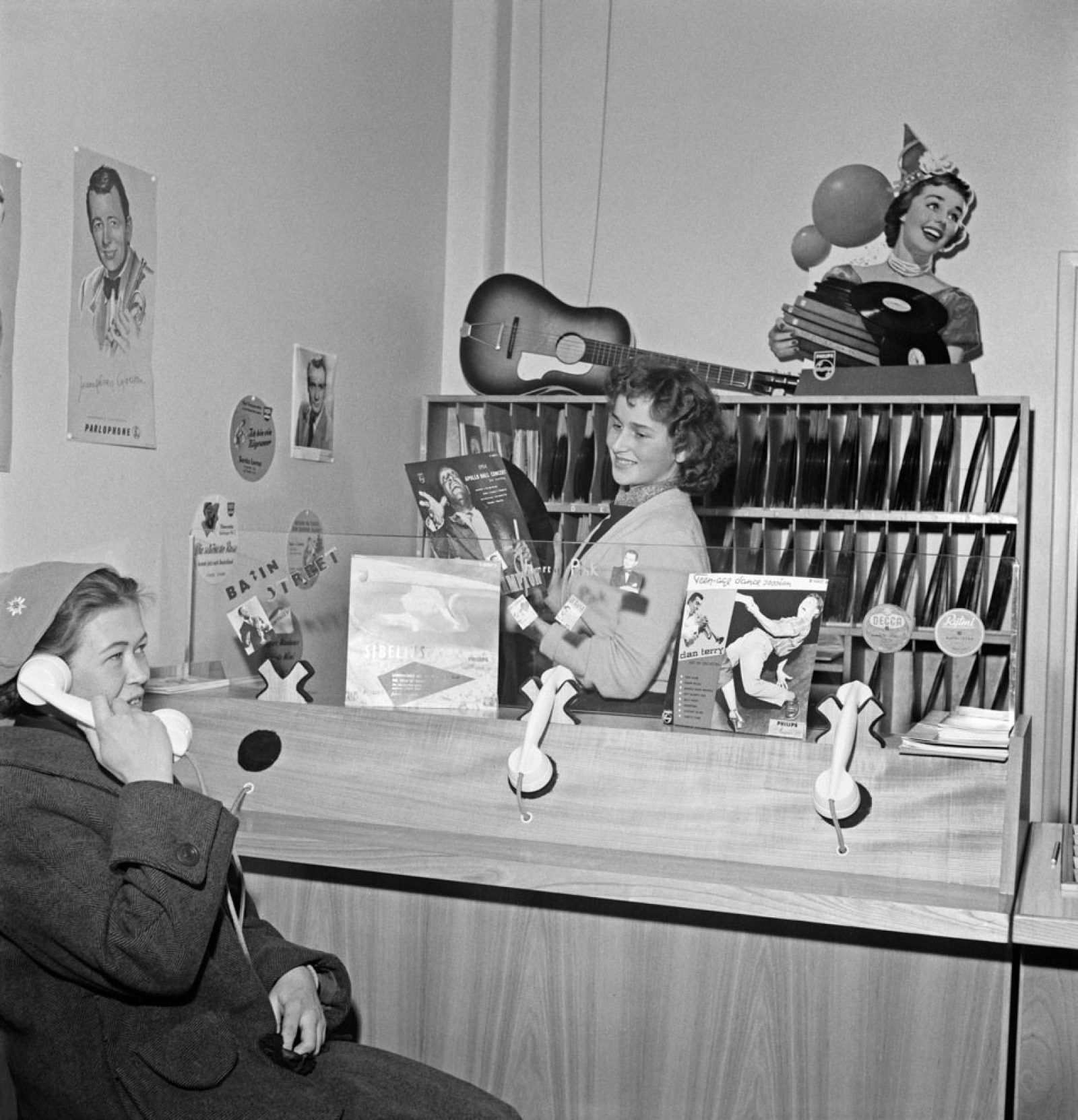
The Record Bar, 1955
In November 1955, Karjaa’s new record bar invites customers to browse and listen. Miss Else‑May Nyberg plays each chosen record before a purchase is made, the music reaching listeners through one of three personal handsets. The record bar offers three individual listening handsets, and more than 500 records to choose from — from Sibelius to Lionel Hampton.
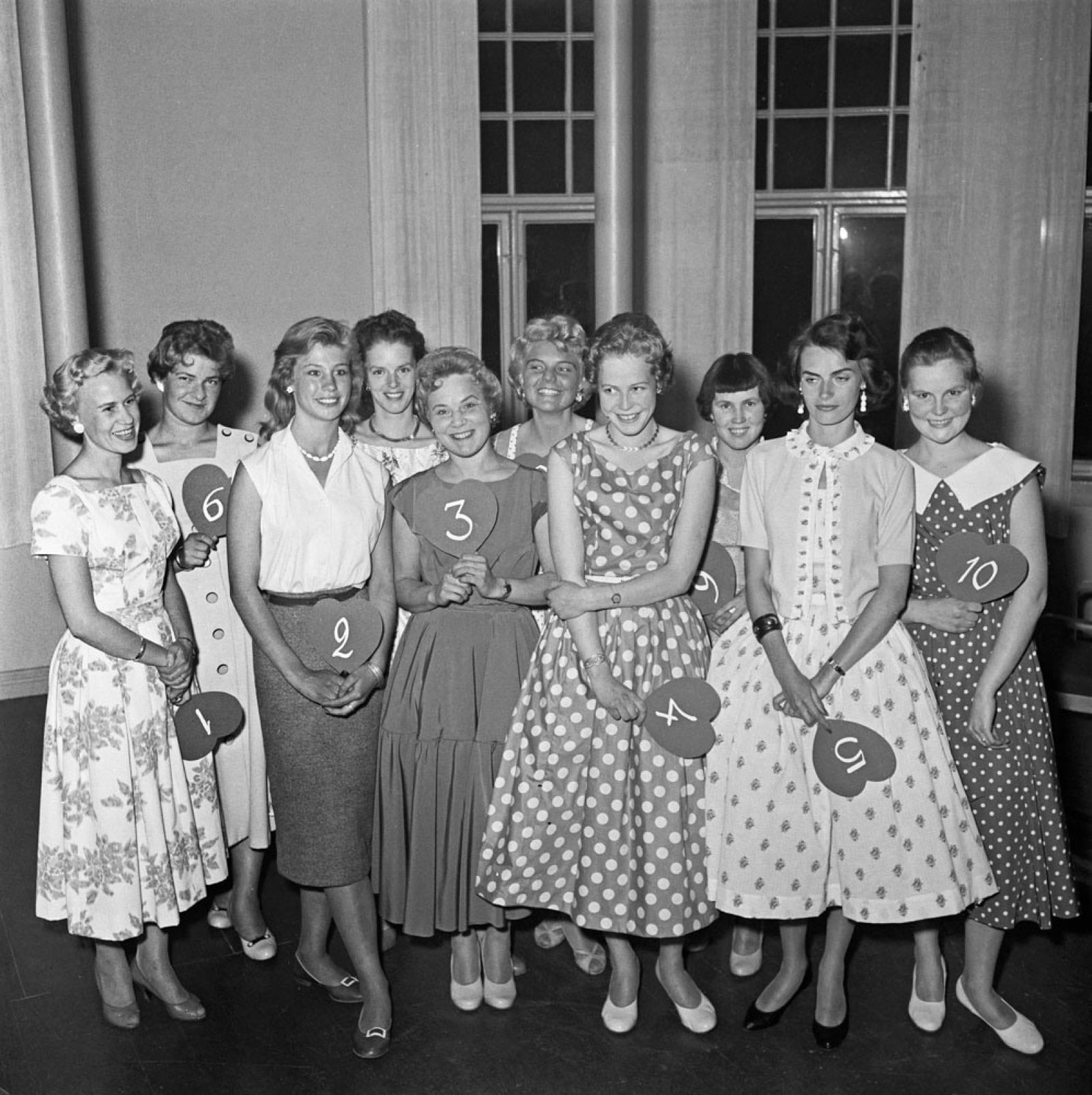
Miss Summer Hanko, 1957
Miss Summer Hanko is crowned in Hanko on July 6, 1957. The contestants were: No 1 Pirkko Järventaus from Helsinki, No 2 Lillemor Carlberg from Stockholm, No 3 Ingegerd Westerlund from Karjaa, No 4 Birgitta Lundqvist from Hanko, No 5 Mrs Gun Lindell from Helsinki, No 6 Brita Wikström from Karjaa, No 7 Maj-Gret Vuori from Hanko, No 8 Gunnel Westerlund from Helsinki, No 9 Brita Tillman from Hanko and No 10 Viveka Bäckman from Hanko. When the votes are counted, it is Mrs Gun Lindell from Helsinki who is named the winner.
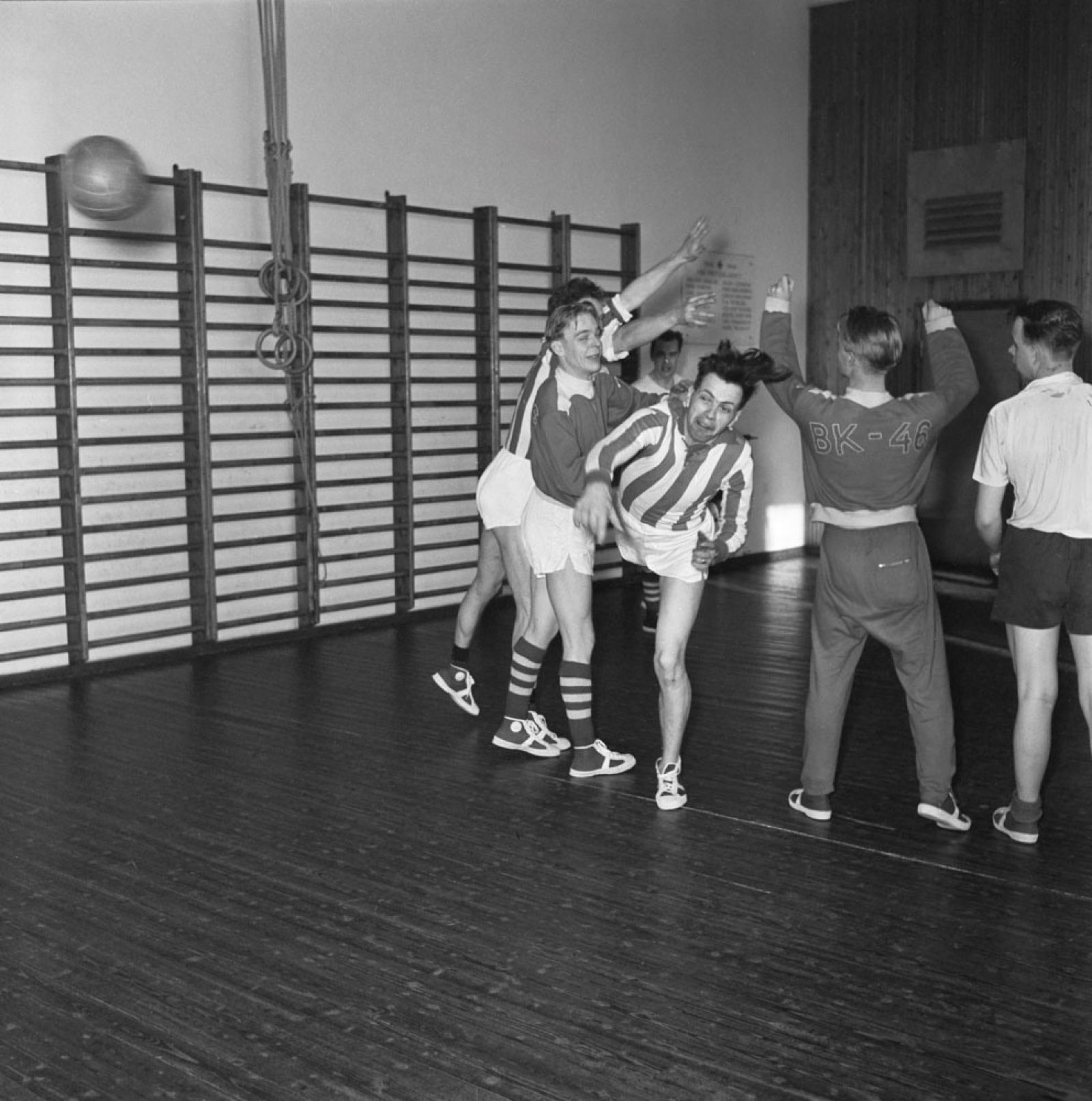
Handball, 1958
The Karjaa handball team BK-46 trains in the gym of the Kiila primary school on 19 February 1958. Folke ‘Focke’ Söderberg forces his way between Lennart ‘Leisku’ Malmberg and Hilding ‘Hilda’ Nordström before sending the ball flying. In the background, Putte Möller watches the play unfold.
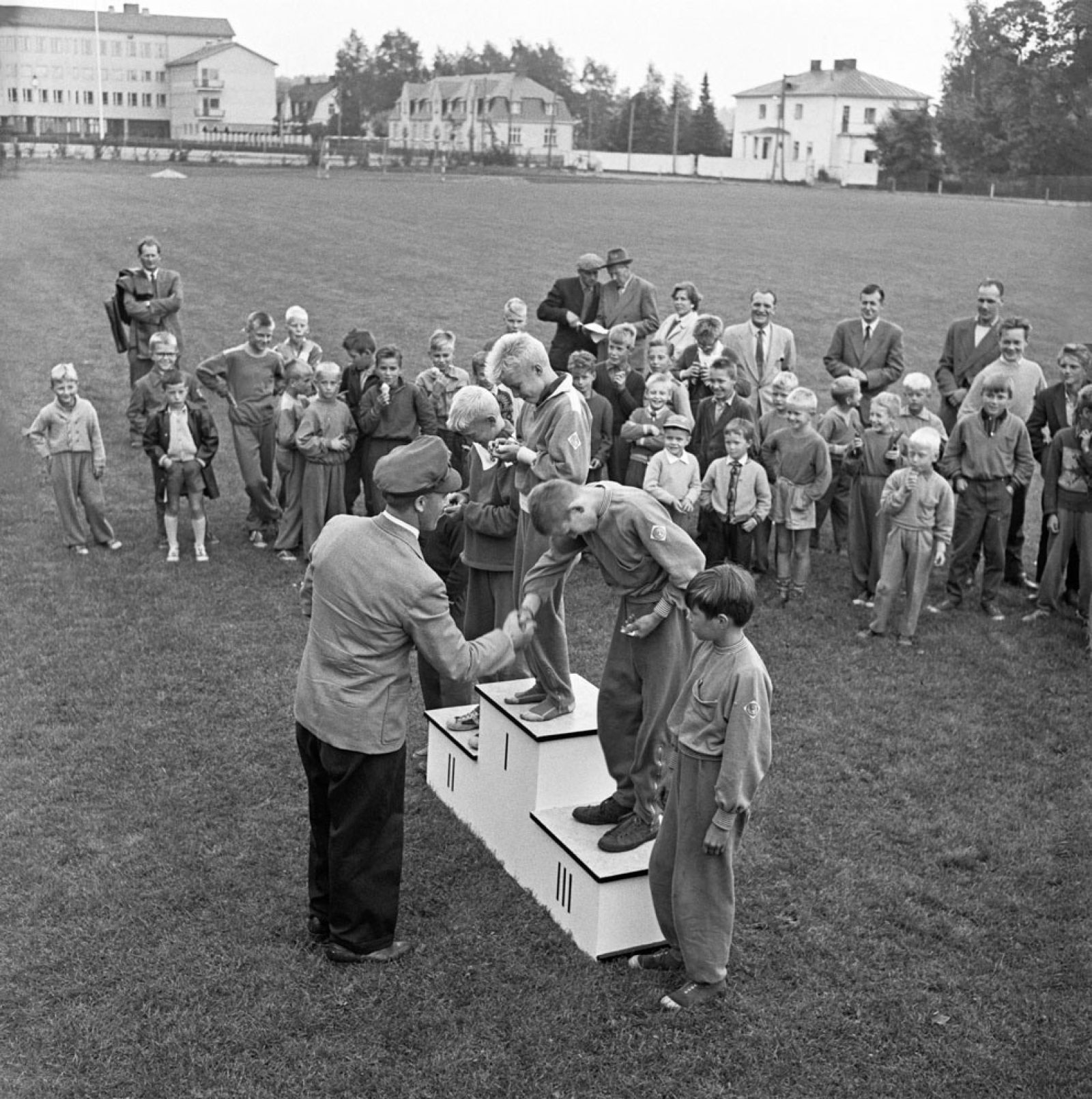
The Western Uusimaa junior athletics cup, 1958
On 24 August 1958, the final of the Western Uusimaa junior athletics cup takes place in Tammisaari. Chief judge Björn Sirén steps forward to award the medals: B. Vinberg of EIF in first place, S. Roos of EIF in second and K. Pihl of Karis–Svartå IK in third. Standing beside the podium is S. Sundström of EIF, who finished fourth.
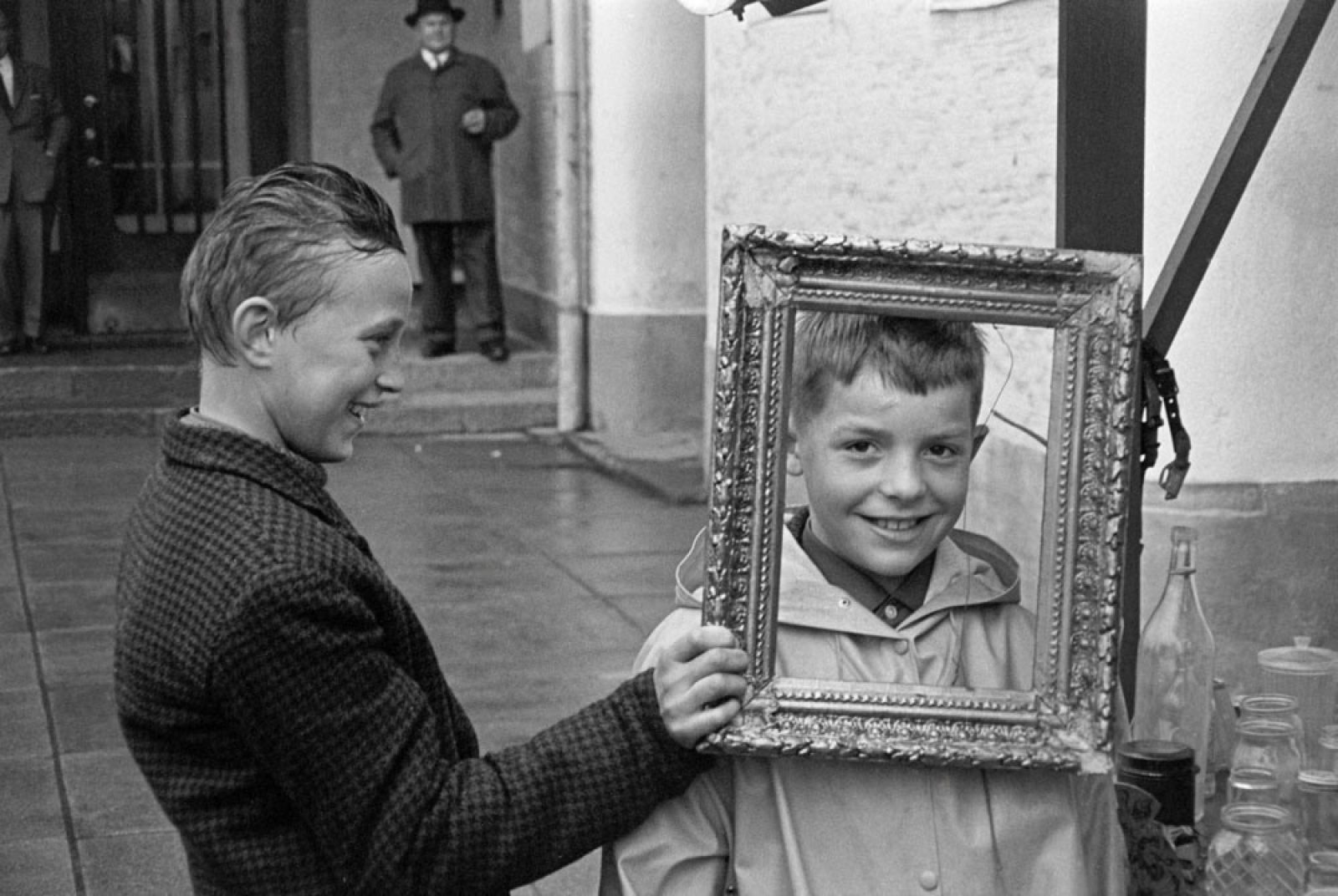
May Day, 1963
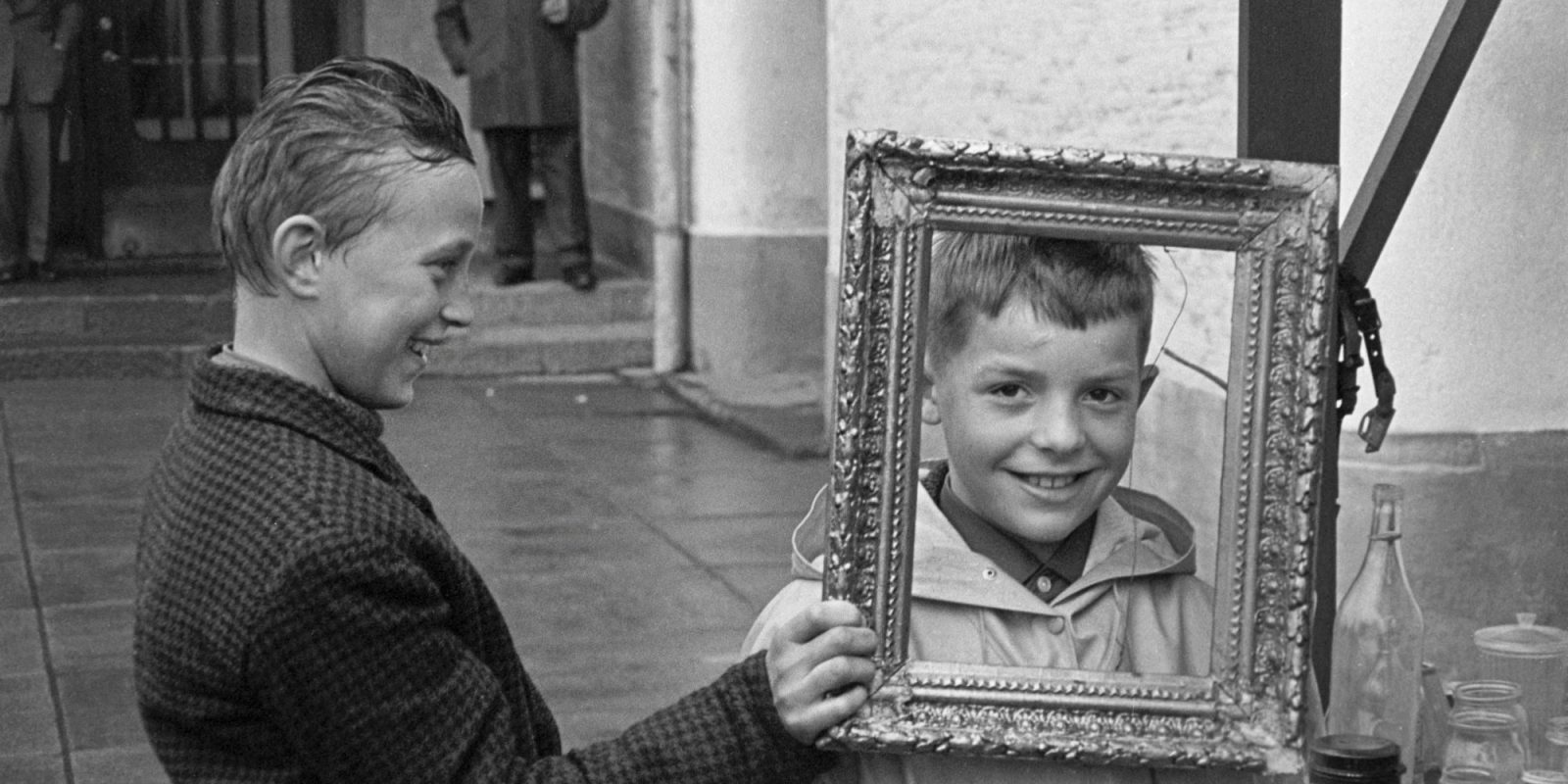
On May Day 1963, Jörgen Brom (left) tries out how his friend Björn Aalto looks when ‘framed’. The boys have found the picture frame at a five‑penny stall at the Karjaa flea market.
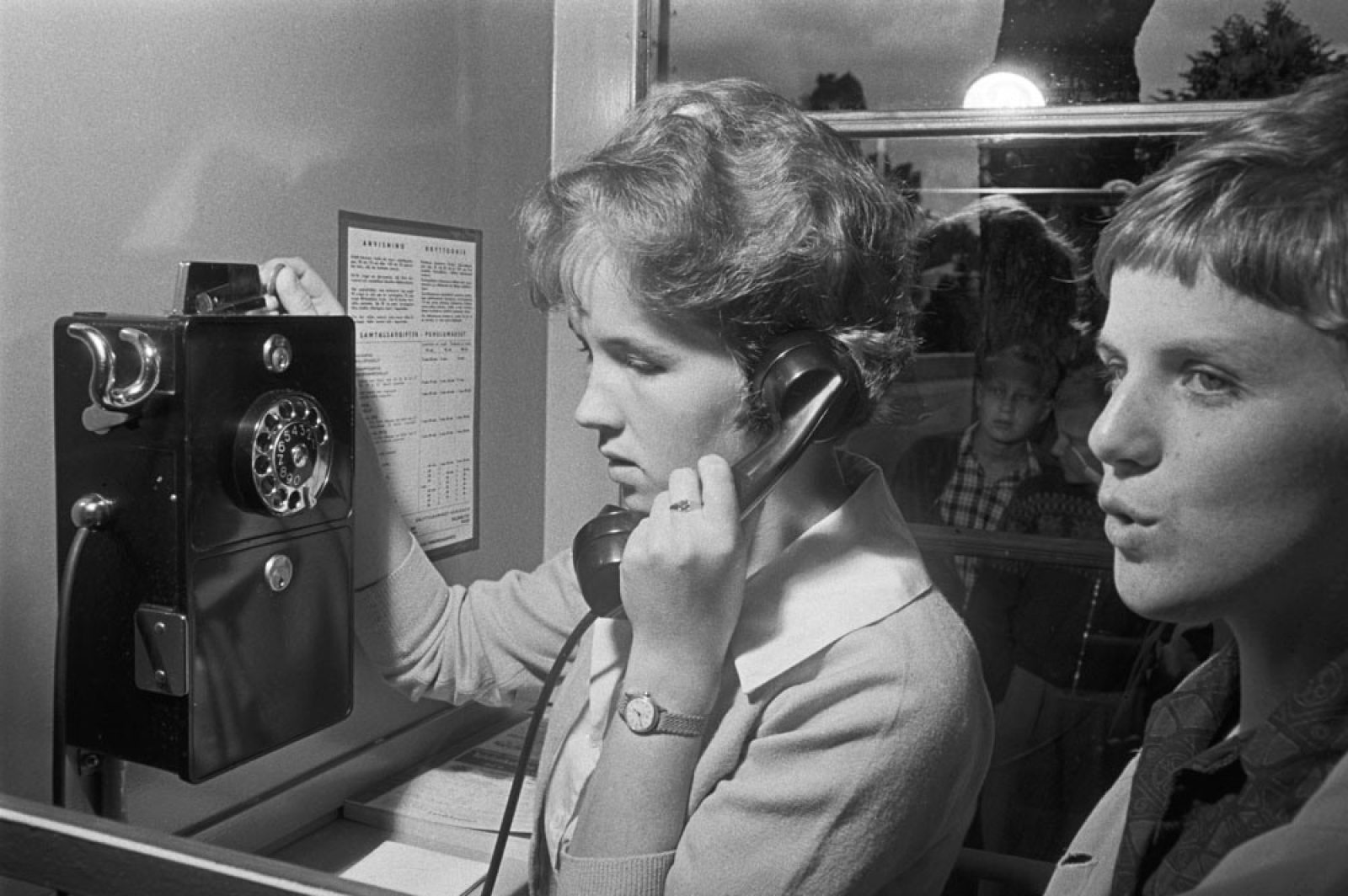
The telephone kiosk, 1961
Barbro Ramstedt stands by, tense with anticipation, as Ebba Arhippainen feeds a coin into the payphone in the telephone kiosk in Karjaa on 5 July 1961. Ramstedt is among the first who can make a long‑distance call from the kiosk — perhaps to Helsinki, perhaps to Tampere — and the coin she drops decides how long the conversation may last.
The story of the telephone stretches far back: the first line to Helsinki was laid in December 1877. Nearly a century and a half later, in June 2026, the operator Elisa will switch off its landline network. The telephone wires will fall silent.
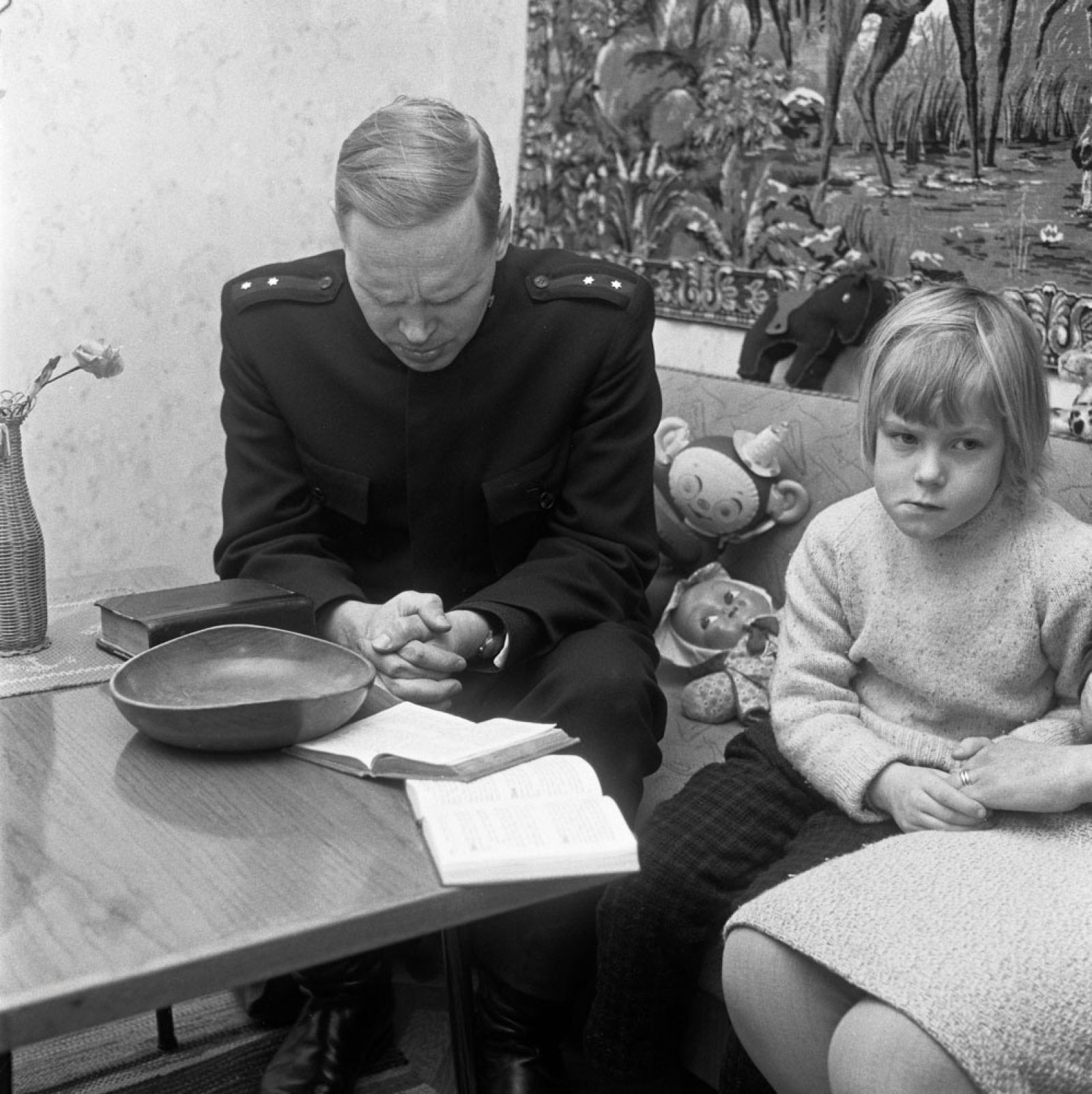
The Salvation Army, 1963
In 1963, The Salvation Army Captain Boris Santamäki leads a prayer in a home in Karjaa. The captain and his wife, Heddy Santamäki, make regular home visits around the town. ‘May we sing?’ they ask.
According to a report in Västra Nyland on 2 February 1963, meetings, prayer sessions, home visits, collections for the needy and the selling of the Army’s magazine are all part of the everyday work of its soldiers.
Exhibition dates: April 24- May 30, 2026
Place: Fotocentrum RASEBORG (the Raseborg Photo Centre)
Kauppiaankatu 3, 10300 Karjaa
Opening hours: Tuesday-Friday 10-16, Saturday 10-14
Sunday and Monday closed, May 1 closed