FAQ on the Aalto Works World Heritage Serial Property
Page content
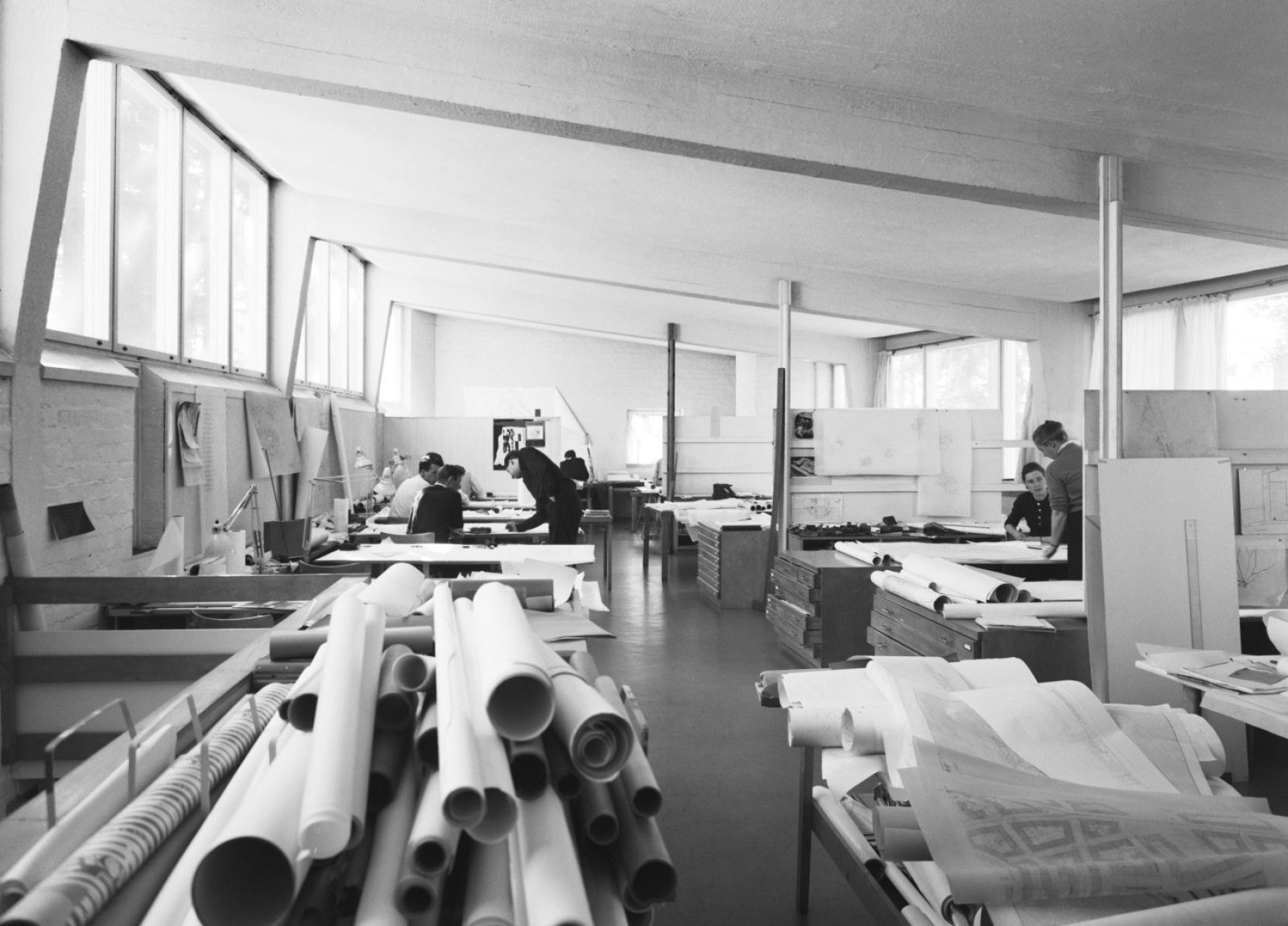
In July 2026, UNESCO’s World Heritage Committee inscribed Aalto Works on the World Heritage List as Finland’s eighth World Heritage property. The serial property consists of thirteen component parts that together represent the architectural legacy of Alvar, Aino and Elissa Aalto.
More than 200 significant buildings and architectural ensembles designed by the Aaltos are known, approximately 50 of them located outside Finland. The inscription of Aalto Works on the World Heritage List recognises the Outstanding Universal Value (OUV) of the Aaltos’ architectural legacy, including their buildings, design philosophy and lasting influence on architecture, urban development and society both in Finland and internationally.
Heritage can be found on the websites of the UNESCO World Heritage Centre, the Finnish Heritage Agency and the Ministry of Education and Culture.
What has been inscribed as Aalto Works and why?
World Heritage properties represent cultural and natural heritage of Outstanding Universal Value to humanity. The nomination prepared under the direction of the Finnish Heritage Agency included thirteen buildings, architectural ensembles and sites designed by the Aaltos. The property is a serial property, meaning that it is composed of several geographically separate component parts that together express its Outstanding Universal Value.
ICOMOS considered that the serial property comprises representative buildings, groups of buildings and sites that significantly influenced the emergence and development of modern architecture and continue to influence contemporary architecture worldwide. Their architecture places human well-being at its centre and provides responses to universal human and societal needs. These qualities are expressed through innovative architectural forms, the creative use of materials and construction methods, and a design approach characterised by exceptional sensitivity, simplicity and integrity.
Inscription on the World Heritage List is the result of a lengthy process centred on identifying and demonstrating a property's Outstanding Universal Value. To be nominated, a property must first be included on a State Party’s Tentative List. The selection of sites for a Tentative List is guided both by UNESCO’s Global Strategy for a Representative, Balanced and Credible World Heritage List and by Finland’s National World Heritage Strategy.
Further information:
Finnish World Heritage Association: How Does a Site Become a World Heritage Property?
Ministry of Education and Culture: National World Heritage Strategy 2015–2025
How did the nomination process unfold?
Finland ratified the Convention Concerning the Protection of the World Cultural and Natural Heritage in 1987. Since then, eight properties in Finland have been inscribed on the World Heritage List, including Aalto Works.
The possibility of recognising Aalto architecture as World Heritage was identified at an early stage. The process ultimately leading to the inscription of Aalto Works spans nearly forty years. The Sunila Pulp Mill Residential Area was proposed for inclusion on Finland’s Tentative List at a meeting of Nordic building conservation authorities in Bergen in 1986. A few years later Villa Mairea was also discussed as a potential candidate, although neither property was ultimately included on the national Tentative List.
In 2004, however, Paimio Sanatorium was added to Finland’s revised Tentative List. A nomination was subsequently prepared but withdrawn before examination by the World Heritage Committee in 2007 following preliminary evaluations. The international ICOMOS assessment of that nomination contributed to the development of the idea of a broader serial nomination based on the Aaltos’ architectural legacy.
Preparation of the Aalto Works nomination by the Finnish Heritage Agency was a multi-year process. It began with the revision of Finland’s Tentative List in 2018–2019, which included extensive public and stakeholder consultation. The nomination concept was further developed during 2020–2021, while the full nomination dossier was prepared between 2022 and 2024 in collaboration with property owners, municipalities, government authorities and a wide range of experts.
The serial nomination covered seven regions and seven cities across Finland. Property owners and municipalities actively supported the project. The expertise of the Alvar Aalto Foundation and other World Heritage specialists was essential throughout the preparation process.
The Aalto Works nomination dossier was submitted to UNESCO in Paris in January 2025. The final evaluation was undertaken by ICOMOS, the advisory body to the World Heritage Committee on cultural properties. On 26 July 2026, at its session in Busan, Republic of Korea, the World Heritage Committee decided to inscribe Aalto Works on the World Heritage List.
Which Thirteen Component Parts Form Aalto Works?
The Aalto Works World Heritage property consists of thirteen architectural sites in Finland. Together they form a thematic serial property entitled Aalto Works. In UNESCO terminology, the overall entity is the property, while the individual sites included within it are known as component parts.
The thirteen component parts are:
Further information about the component parts can be found on the website of the Alvar Aalto Foundation.
Why Were These Particular Component Parts Selected?
The component parts were selected because, together, they best represent the attributes that convey the property’s Outstanding Universal Value. To be inscribed on the World Heritage List, a property must demonstrate Outstanding Universal Value and satisfy at least one of the ten World Heritage criteria established in the Operational Guidelines for the Implementation of the World Heritage Convention.
Aalto Works was nominated under criterion (ii):
“to exhibit an important interchange of human values, over a span of time or within a cultural area of the world, on developments in architecture or technology, monumental arts, town-planning or landscape design.”
The nomination focuses on modernism and the societal impacts of architecture. Why?
The nomination is rooted in the ideas of the twentieth-century international Modern Movement and demonstrates architectural responses to social needs. It presents modernism not merely as an architectural style but as a broader social and cultural project. In the development of the young Finnish nation, equality, education, public welfare and social progress were pursued through investments in architecture, urban planning, art and design. Architecture consequently became an important expression of Finland’s modern national identity.
The property demonstrates how innovative architectural solutions and international exchange contributed to the development of modern architecture while remaining firmly grounded in human needs and community life. The nomination also highlights the distinctive relationship between architecture, nature and landscape that characterises the Aaltos’ work. Conventional materials and familiar architectural themes were transformed through inventive forms, spatial experimentation and original design solutions.
What do the components of the Aalto Works embody?
The thirteen component parts represent a carefully selected yet necessarily limited sample of the Aaltos’ extensive architectural production. Each component part contributes specific attributes to the Outstanding Universal Value of the serial property and represents a distinctive building type, function or design approach. Similar or overlapping sites were deliberately excluded to ensure that every component part makes a unique contribution to the overall property.
The selection process also considered the conditions of authenticity and integrity, the current state of conservation of each component part, and the adequacy of legal protection and management arrangements.
Among the selected component parts are landmark buildings associated with Finland’s emergence as a Nordic welfare state and an active member of the international community. The Social Insurance Institution Headquarters in Helsinki symbolises the foundations of the welfare system. Seinäjoki Civic and Cultural Centre and Säynätsalo Town Hall embody principles of local democracy and public participation. Finlandia Hall reflects Finland’s growing international role and served as a significant venue for diplomacy and international affairs.
The House of Culture became an important cultural and civic gathering place. Paimio Sanatorium pioneered patient-centred healthcare architecture, integrating medical and psychological considerations into architectural design. The Sunila Residential Area introduced innovative planning solutions for industrial communities and represented a new direction in workers’ housing. The Aalto Campus of the University of Jyväskylä symbolises the importance of education and intellectual advancement in modern society. The Church of the Three Crosses demonstrates an innovative interpretation of community-oriented religious architecture, combining everyday functions with sacred space.
The architects’ own environments of living and working are also represented within the property. Aalto House illustrates the integration of family life and creative work, while Aalto Studio demonstrates how architecture can foster collaboration and equality within a professional community. The Experimental House at Muuratsalo preserves the Aaltos’ pioneering experiments with brick, tile and masonry construction and exemplifies the integration of architecture with the natural landscape. In Villa Mairea, designed as a home for Maire and Harry Gullichsen, architecture, interior design and art form an inseparable whole.
The component parts included in Aalto Works are therefore the result of extensive research, careful selection and international evaluation. Together they form a balanced and representative serial World Heritage property. While they constitute only a small proportion of the Aaltos’ extensive body of work, collectively they provide the clearest and most comprehensive expression of the Outstanding Universal Value for which Aalto Works was inscribed on the World Heritage List. It is also possible that the series may be expanded to include certain Aalto sites located outside Finland, if the States Parties in which these buildings are situated nominate them and if an identified outstanding attribute contributes coherently to the series as a whole.